
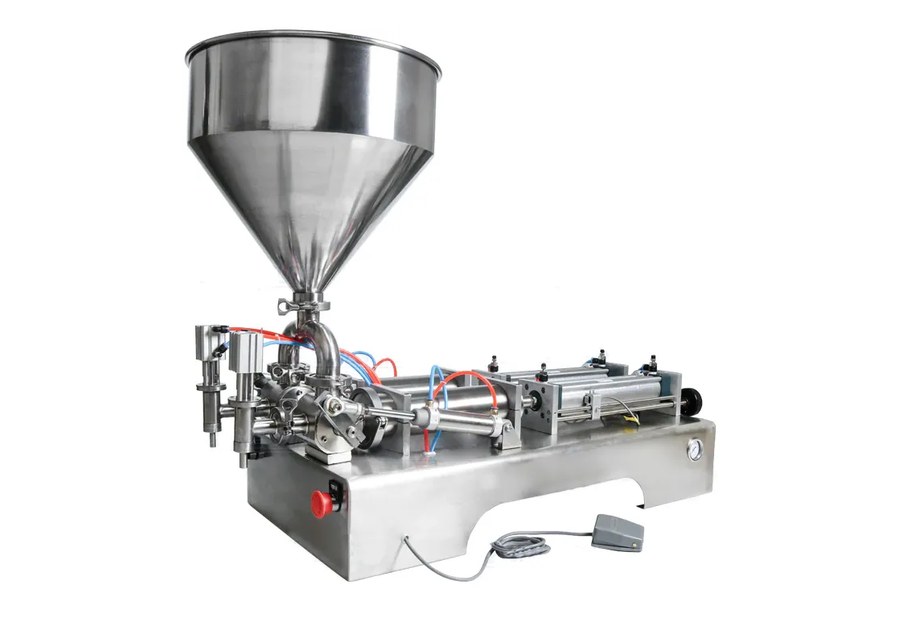
Semi-automatic paste fillers
Flexible piston filling for smaller batches, trials, contract packing and products where an operator places containers or controls each cycle.
View semi-auto route →Choose a paste filling machine around your product, container and output target — with support for piston fillers, viscous product filling and complete fill-cap-label lines.
Tell us what you need to fill and the problems you need to solve: thick product movement, dosing accuracy, clean nozzle shut-off, hopper feeding, heating or mixing, container handling and the level of automation required.
Flexible piston filling for smaller batches, trials, contract packing and products where an operator places containers or controls each cycle.
View semi-auto route →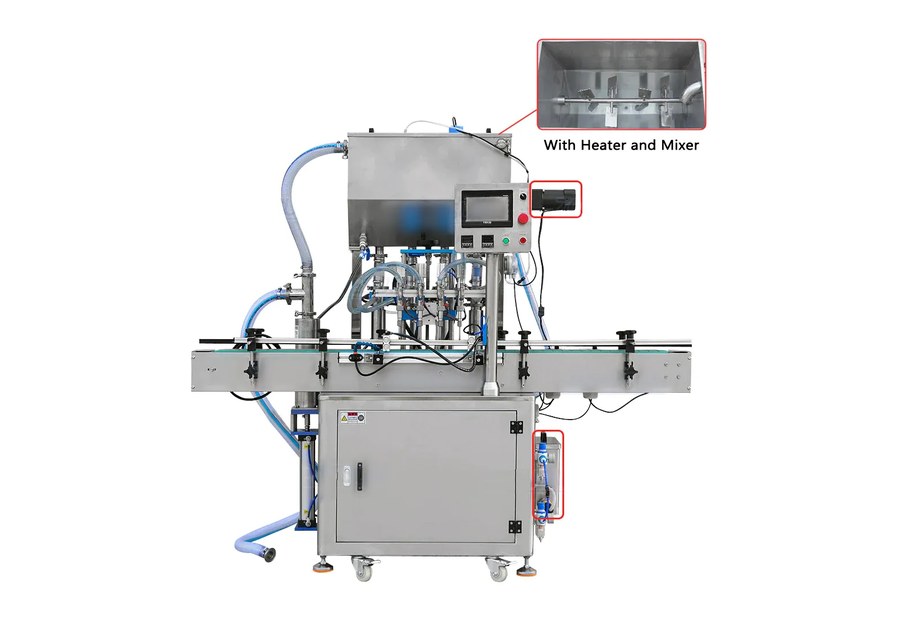
Inline multi-nozzle filling for higher output, repeatable dosing and integration with conveyors, capping, labelling and coding.
View automatic route →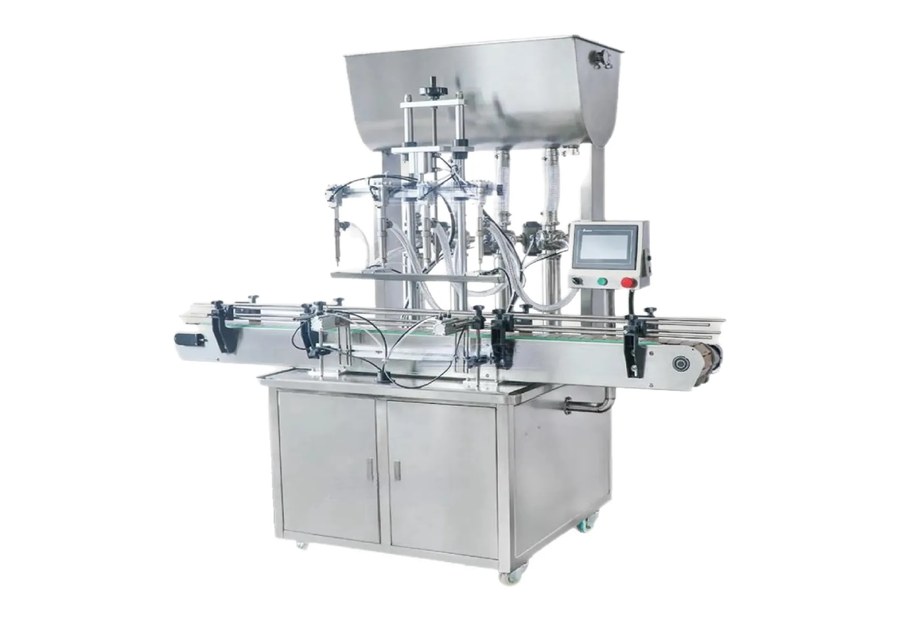
Positive-displacement volumetric dosing for sauces, creams, gels, honey, sealants and similar viscous products.
Compare piston fillers →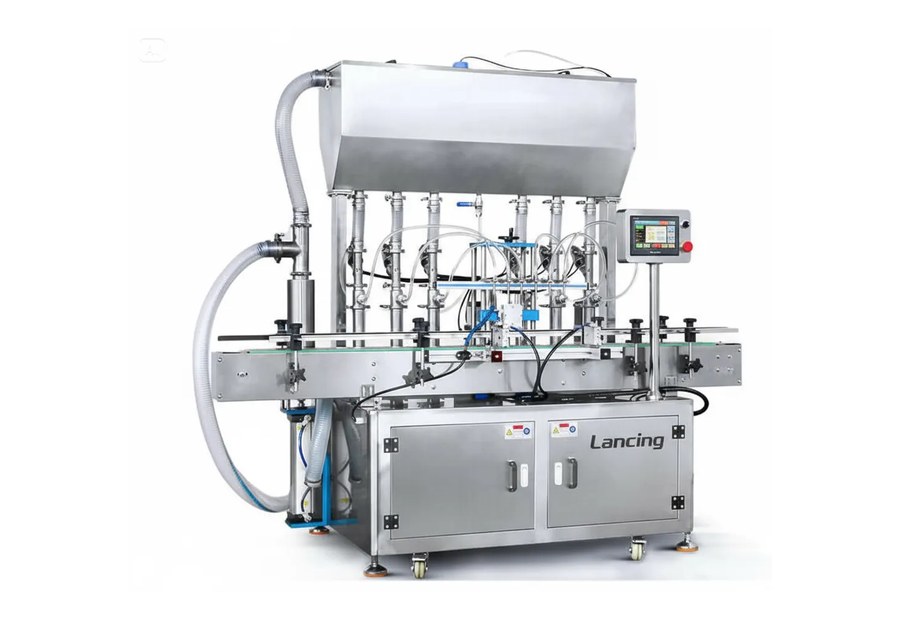
Plan the filler with closure handling, bottle stability, conveyor layout, labelling and end-of-line requirements from the start.
Plan line integration →Compare the practical machine routes first, then move into product-specific requirements such as sauce filling, cream filling and adhesive filling equipment.
Thick products often need positive displacement filling, controlled hopper feed and a product path that avoids air pockets, smearing and unstable dosing.
Drips, tails and stringing should be handled before the quote stage. Anti-drip nozzles, product temperature and fill speed all affect presentation.
A filler should be planned with container stability, capping torque, labelling, coding and conveyor space when production will grow beyond a bench operation.
Choose the product closest to yours to see the filling issues that normally decide machine selection, then request advice with your own pack and output details.
Ketchup, chutney, pesto, mayonnaise, dressings and viscous food sauces where drip control and clean jar presentation matter.
Sauce filling machines →Thick, sticky and temperature-sensitive products that may need heated hoppers, careful cut-off and reliable fill repeatability.
Honey and jam fillers →Creams, masks, lotions, gels and personal-care products where cleanability, recipe control and closure integration are important.
Cream and gel filling →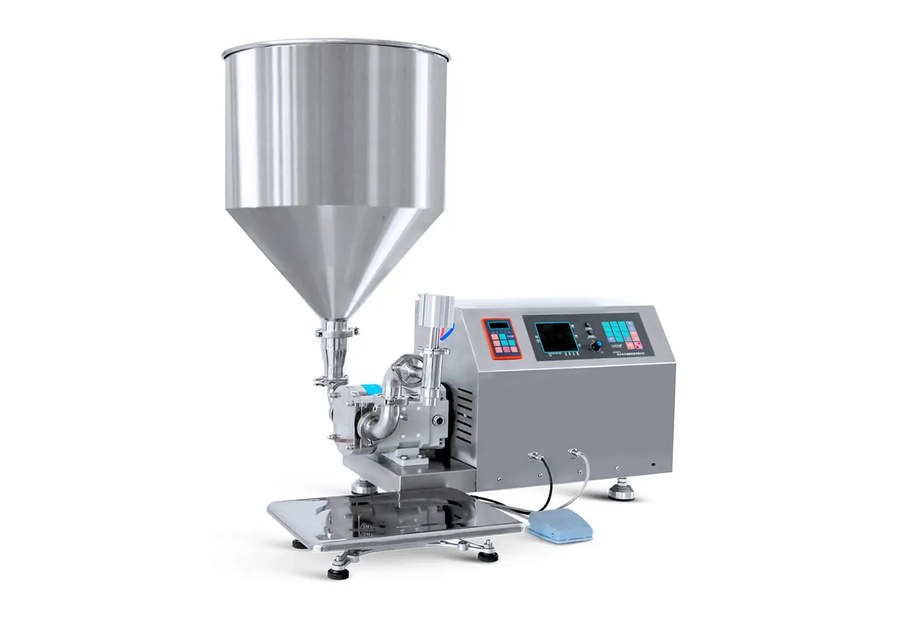
Industrial pastes, waxes, greases, adhesives and sealants where viscosity, stringing and material compatibility must be reviewed.
Industrial paste filling →Send your product, fill volume, container, closure and target output. Those details help Lancing respond with a practical paste filler shortlist instead of a generic answer.
Send the product, container, fill volume and production target. Lancing can review the application and suggest a suitable paste filling route.
A paste filling machine is a filler specified for thick, viscous or semi-solid products such as sauces, creams, gels, honey, adhesives and industrial pastes. The correct route depends on product flow, fill volume, container and required output.
Start with viscosity, dose size, container type and production target. Small batches often suit semi-automatic piston fillers, while higher output lines usually need automatic multi-nozzle filling with conveyors and downstream capping or labelling.
Yes. Paste filling machines can be planned as stand-alone equipment or integrated with conveyors, capping, labelling, coding, accumulation and packing equipment when the whole line needs to work together.
A useful machine comparison starts with what the product does during filling. Viscosity is important, but temperature, particles, aeration, stringing, settling and cleaning access can change the correct dosing route just as much.
Piston and other positive-displacement systems measure a defined quantity of product. The practical checks are whether the product can enter the dosing chamber consistently, whether the valve can pass any particles and whether the selected cylinder covers the required minimum and maximum fills.
Clean presentation depends on the complete discharge path. A shut-off nozzle, suck-back, nozzle diameter, fill profile and product temperature should be considered together. A nozzle that works on a smooth cream may not work on a sauce containing herbs or pieces.
Hopper level, agitation, heat and transfer pressure can affect repeatability. A product that becomes thicker as it cools, separates while standing or traps air during mixing should be tested under conditions that represent normal production.
| Filling route | Useful when | Checks before selection |
|---|---|---|
| Piston displacement | A repeatable batch dose is required for sauces, creams, gels, honey and compatible pastes. | Cylinder range, inlet and outlet valve, particles, seal compatibility, hopper feed and cleaning access. |
| Rotor-lobe pump | A pump-fed route is preferred for viscous or particulate products and gentle product movement is important. | Particle size, shear sensitivity, pump speed, hose or pipe diameter, nozzle cut-off and clean-down method. |
| Progressive-cavity pump | A smooth, low-pulsation feed may suit stringy or difficult products after a representative trial. | Stator and seal compatibility, dry-running risk, product recovery, strip-down time and dose control method. |
| Other positive-displacement pumps | Gear, diaphragm or specialist pump routes may fit a particular product or container. | Product compatibility, shear, pressure, accuracy method, cleaning and whether another Lancing specialist site owns the broader liquid-filling requirement. |
A timed test is more useful than a catalogue speed. It should use representative product, containers and settings, then record dose variation, clean cut-off, product temperature and the time needed for cleaning or format change.
Provide enough product for priming, adjustment and repeated fills. State the normal filling temperature, whether the product settles or thickens, and the largest expected particle or inclusion.
Plan a product sample test →Supply representative jars, bottles, tubs or cartridges with closures. Neck opening, stability, headspace and label area influence the nozzle and conveyor arrangement.
Review line integration →Agree how fill quantity, output, dripping, rejects and changeover will be measured. Final figures should always state the product, dose, pack and machine configuration used.
Use the buyer guide →For products that behave more like free-flowing or foaming liquids, compare the broader Lancing liquid filling machinery range. For general piston and volumetric principles beyond paste applications, see Lancing volumetric fillers.
No. Viscosity should be reviewed with product temperature, particles, air content, stringing, settling, fill range, container opening and cleaning method. Two products with similar quoted viscosity can behave very differently through a valve and nozzle.
Compare timed results using the real product, target dose and representative container. State the number of active nozzles, fill profile, product temperature, operator tasks and any time needed for container indexing or settling.
Heating may help a product remain pumpable and mixing may help maintain a uniform product, but both can change viscosity, aeration and cleaning requirements. The temperature and mixing regime should be agreed from product evidence.
Some can, provided the particle size, shape and concentration are compatible with the inlet valve, outlet valve, cylinder and nozzle. A representative product trial is the safest way to confirm passage without damage or blockage.
Agree the product and pack samples, fill range, acceptance method, target output, contact materials, cleaning approach, utilities, guarding, line interfaces and which performance figures will be witnessed during testing.
A paste filler should be selected around the fault that must be removed from the present process. Recording when the problem appears is more useful than describing the product as simply “thick”.
Check hopper level, trapped air, product temperature, chamber refill and the measurement method. Record sequential fills rather than testing isolated containers, because drift may only appear as the product condition changes.
Review nozzle closure, suck-back, product pressure, dwell time and the distance to the container opening. A clean cut-off must be proved at the normal production temperature and at the intended time between packs.
Map residual product, removable wetted parts, hose or pipe hold-up, cleaning tools and the restart sequence. A fast fill cycle can still be the wrong choice where product recovery and clean-down dominate a short production run.
Separate product-supply limits from container-handling limits. Infeed spacing, hopper replenishment, cap application, labelling and accumulation can each determine accepted output even when the dosing stroke is fast.
The strongest starting specification describes the product at the filler, the pack presented to the nozzle and the quality check applied to the finished container. That gives the trial a clear pass or fail basis.
| Evidence | What to record | Decision it supports |
|---|---|---|
| Representative product | The thickest normal batch, largest credible inclusions, normal aeration and any settling or separation. | Whether the product can refill the dosing chamber, pass valves and leave the nozzle without damage or blockage. |
| Production condition | Temperature at filling, time since mixing, hopper residence time and whether heat or agitation is normally used. | Whether a standard hopper, heated hopper, mixer or controlled product feed needs to be tested. |
| Pack and closure set | Production jars, bottles, tubs or cartridges, neck opening, headspace, stability, caps or lids and labels. | Nozzle diameter, fill position, container guides and whether downstream handling limits the line. |
| Quality and output target | Target dose, acceptable variation, measurement method, clean-neck requirement and accepted containers per hour. | The trial sample plan, number of filling heads, fill profile and complete-line acceptance test. |
| Changeover and cleaning | Product sequence, cleaning method, recovery expectations, available utilities and permitted changeover window. | Product-path design, removable parts, spare hose or nozzle sets and the practical automation level. |
| Current production problem | Photographs or video of drips, underfills, particles at a restriction, slow handling or repeated line stops. | Which failure should be recreated during the sample trial and witnessed before sign-off. |
Use the product sample test guide to plan the trial, the nozzle and cut-off guide for tails or drips, the cleaning and changeover guide for short runs, and the line integration guide where capping, labelling or conveying affects output.
Send the normal product condition, fill range, containers, closures and target accepted output. Lancing can use those details to shortlist a paste filling route and define the evidence required from a trial.
Use product from a normal production batch at the normal filling temperature, including the largest expected particles or inclusions. Use production containers and closures, allow enough product for priming and adjustment, then run repeated fills rather than a single demonstration cycle.
Only where the SKUs form a genuine product and pack family. Different temperatures, particles, dose ranges, container openings, cleaning rules or contact-material requirements may need separate trial conditions or change parts.
Record clean cut-off, product on the neck or rim, container handling, product condition after pumping, startup rejects, accepted output, residual product and the cleaning or changeover sequence.
A broader liquid-filling method may be more appropriate. Compare the application with Lancing liquid filling machinery rather than forcing a paste-focused piston or pump route onto a product that does not need it.
The strongest paste filling enquiry defines the product and pack first, then decides how suitability, output and handover will be proved.
Separate must-have performance from preferred options, future expansion and site-dependent assumptions.
Specification guide →Test the actual product, container and filling condition before committing to a valve, nozzle or pump route.
Sample trial guide →Use a written FAT protocol for dosing, presentation, controls, changeover and evidence before dispatch.
FAT guide →Plan utilities, access, product feed, integration, commissioning and safe handover before delivery.
All technical resources →A useful first answer does not require a complete specification, but it should identify the evidence that will rule machine routes in or out. These questions help turn an early enquiry into a testable application rather than a catalogue comparison.
An exact viscosity value is helpful but not essential for an initial review. Send a representative product sample, the normal filling temperature, a short video showing how it pours or holds shape, the intended fill volume and the container opening. Lancing can then identify which product-path restrictions, feed arrangements and trial conditions need to be checked before a filler is shortlisted.
No. A photograph can show the pack and broad product appearance, but it cannot confirm chamber refill, particle passage, air entrainment, stringing, material compatibility or cleanability. Photographs are useful when combined with product and pack samples, operating temperature, fill range and a description of the present production problem.
Paste behaviour can change with batch temperature, mixing history, standing time, aeration, particle distribution, hopper level and the time product remains in the machine. A representative trial should therefore define the hardest normal condition and record it, rather than proving the filler only with the easiest fresh batch.
Start with the narrowest restriction in the proposed product path and the hardest normal product condition. Check whether the product can enter the dosing chamber, pass valves and nozzle, leave a clean cut-off and be recovered and cleaned acceptably. A short controlled sample trial usually removes more uncertainty than comparing headline machine speeds.
Use the paste filling question library, compare manual, semi-automatic and automatic filling, or review whether one filler can cover several products and packs.
Send the product condition, fill range, pack and production problem. Lancing can identify the next evidence needed without assuming that one machine type fits every paste.
Reference data helps narrow the route, but the quoted machine still needs to be confirmed against the normal product condition, fill range, container opening, cleaning method and accepted output test.
A compact pneumatic piston route with published cylinder options from 10–100 ml to 1000–5000 ml and a reference output of 5–20 bottles per minute.
Review LU-GT1 data →A single-head pneumatic filler supplied with a 2 m conveyor in the published configuration, with cylinder options from 5–100 ml to 1000–5000 ml.
Review LU-GY1C data →A four-head automatic piston configuration with a published 160 L hopper, transfer feed and reference output of 20–50 bottles per minute.
Review LU-YTGt-4PX data →Send the product, normal temperature, dose range, container and required accepted output. Lancing can confirm which published configuration is relevant and what must be proved in a trial.
Drive method, verification and wear are often considered after the machine type has already been chosen. Review them early so the quotation reflects the real production duty.
Separate piston dosing from the way the piston is driven, controlled and maintained.
Compare drive methods →Define the product, tare, sample sequence and acceptance method before an accuracy figure is judged.
Plan fill verification →Hard particles and abrasive fillers can change seals, valves, pumps, spares and the evidence needed from a trial.
Review abrasive products →