
Paste filler methods
Compare piston, servo-piston, rotor-lobe and pump-assisted routes without forcing every product into one answer.
A practical buying guide for manufacturers comparing paste fillers, piston filling machines, viscous liquid fillers and integrated fill-cap-label lines.
Use this guide to move from general interest to a practical enquiry with the details needed to specify a machine.
The guide covers product methods, applications, quote details, troubleshooting, changeovers and line integration in practical production language.
| Step | Decision | Why it matters |
|---|---|---|
| 1 | Define the product | Viscosity, temperature, air entrapment, particles and stickiness decide the filling principle and nozzle setup. |
| 2 | Define the container | Neck size, height, material and stability affect fill accuracy, splashing, dripping and conveyor design. |
| 3 | Define the fill | Fill volume range, tolerance, headspace and presentation standard affect cylinder size and filling cycle. |
| 4 | Define the output | Batch size, BPM target and operator involvement decide semi-automatic versus automatic filling. |
| 5 | Define downstream equipment | Capping, labelling and coding need to match the filler speed and container handling method. |
Compare piston, servo-piston, rotor-lobe and pump-assisted routes without forcing every product into one answer.
Include sections on dripping, tailing, stringing, particles, hot fill, aeration, clean-down and product contact materials.
Use the checklist so your first contact includes enough data to recommend a machine.
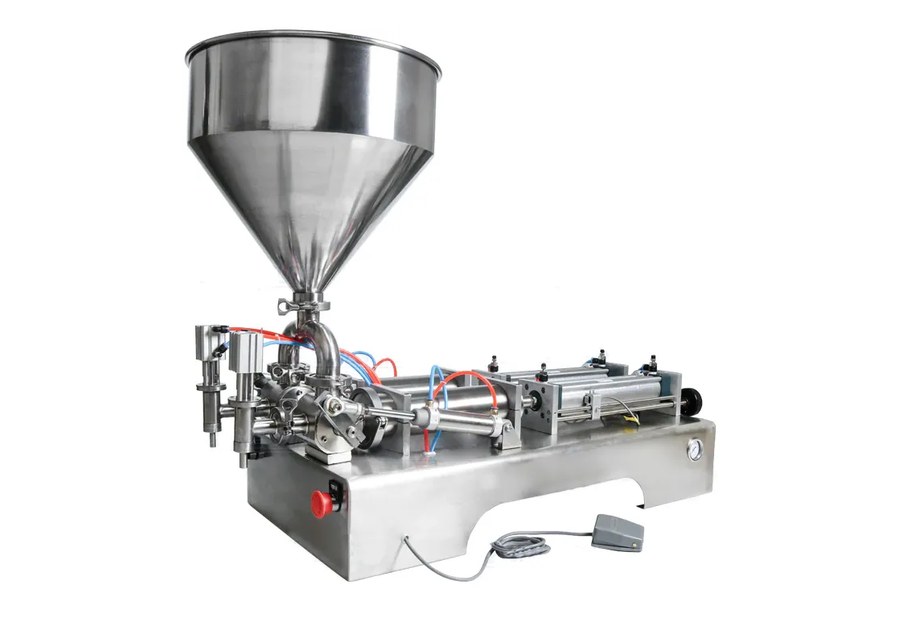
Flexible piston filling for smaller batches, trials, contract packing and products where an operator places containers or controls each cycle.
View semi-auto route →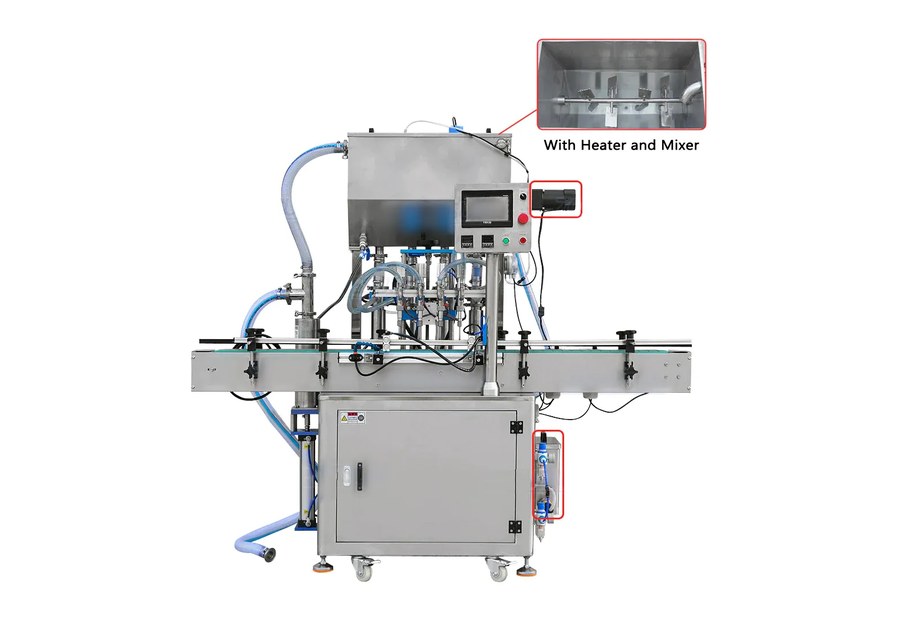
Inline multi-nozzle filling for higher output, repeatable dosing and integration with conveyors, capping, labelling and coding.
View automatic route →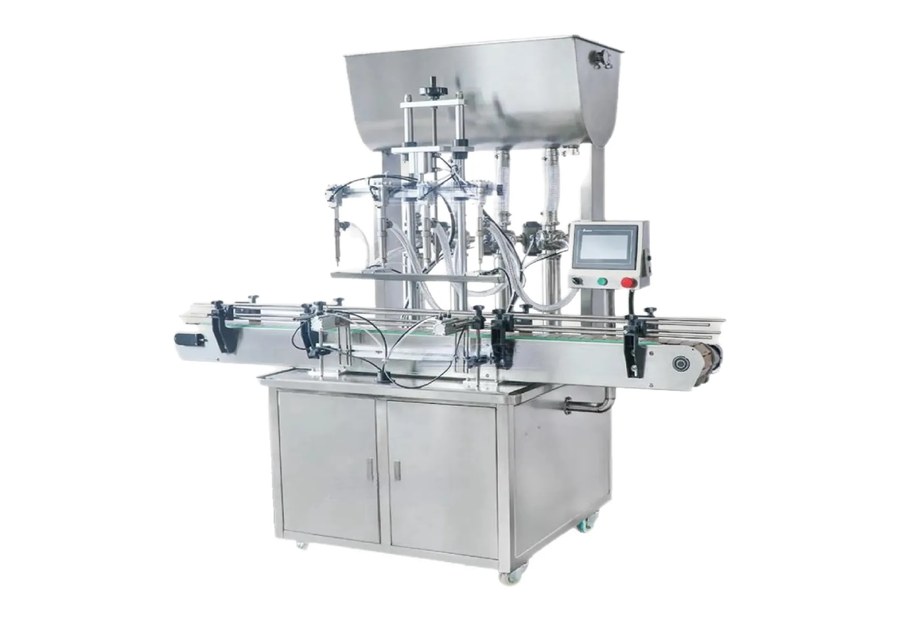
Positive-displacement volumetric dosing for sauces, creams, gels, honey, sealants and similar viscous products.
Compare piston fillers →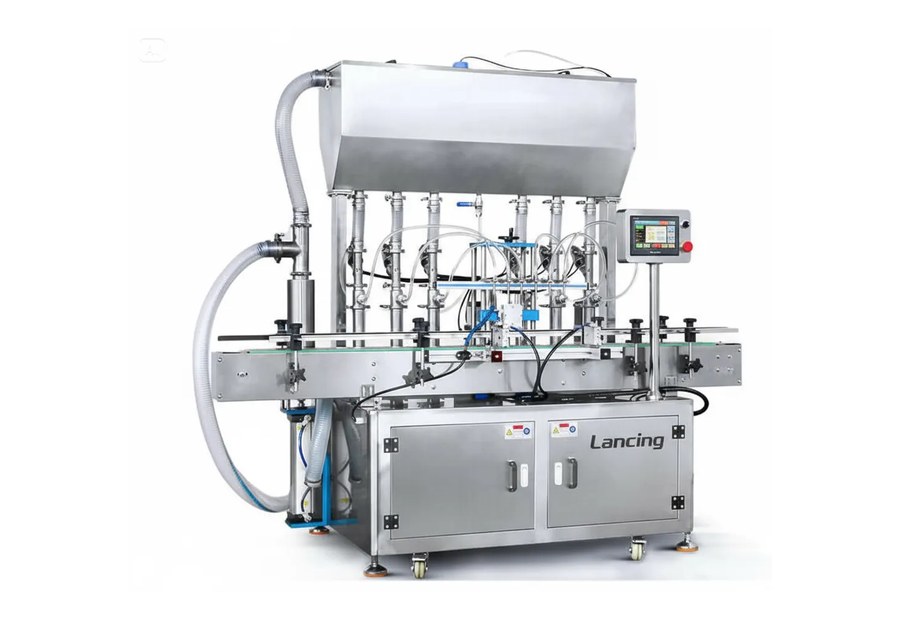
Plan the filler with closure handling, bottle stability, conveyor layout, labelling and end-of-line requirements from the start.
Plan line integration →Ketchup, chutney, pesto, mayonnaise, dressings and viscous food sauces where drip control and clean jar presentation matter.
Sauce filling machines →Thick, sticky and temperature-sensitive products that may need heated hoppers, careful cut-off and reliable fill repeatability.
Honey and jam fillers →Creams, masks, lotions, gels and personal-care products where cleanability, recipe control and closure integration are important.
Cream and gel filling →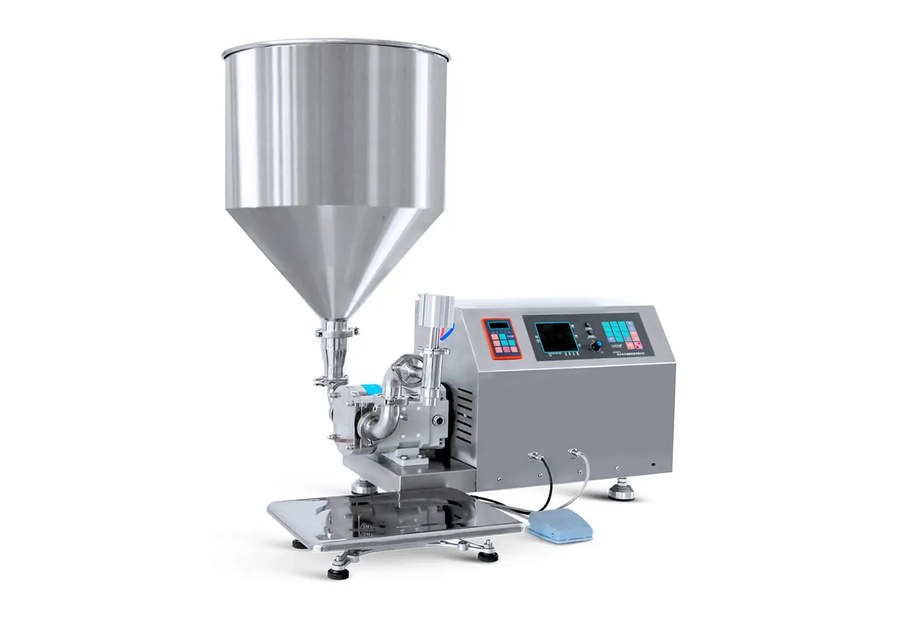
Industrial pastes, waxes, greases, adhesives and sealants where viscosity, stringing and material compatibility must be reviewed.
Industrial paste filling →Start with product behaviour, fill volume, container, target output and cleaning needs. Then compare semi-automatic, automatic, piston and integrated line routes.
Many paste applications use positive-displacement filling such as piston or pump-based systems, but the best method depends on viscosity, particles, temperature, accuracy and clean-down.
Send as much as possible: product samples or data, fill volume, container dimensions, closure, target output, cleaning needs, available utilities and site constraints.
Sometimes, but it depends on the viscosity range, dose range, pump or piston route, nozzles, cleaning process and changeover needs.
Output depends on product flow, fill volume, nozzle count, operator involvement, container handling and downstream line speed. A timed trial or specification review gives a more realistic answer.
A good buying process records the assumptions behind fill range, accuracy, output and cleaning. That allows quotations to be compared on the same basis and reduces disputes when the machine is tested.
| Specification item | Minimum information | Acceptance evidence |
|---|---|---|
| Product | Name, temperature, viscosity behaviour, particles, aeration, settling, shear and material compatibility. | Representative sample and recorded condition during the test. |
| Fill range | Every production dose, tolerance and whether measured by volume or mass. | Sequential checks at agreed low, typical and high fills. |
| Pack | Dimensions, opening, stability, headspace, closure, label area and sample quantity. | Run the minimum and maximum formats with production components. |
| Output | Good packs per minute or hour, batch size, shift pattern and operator tasks. | Timed continuous run including normal container handling. |
| Cut-off | Acceptable drips, strings, neck cleanliness and product recovery. | Close-up inspection and reject count over the timed run. |
| Cleaning | Approved method, allergens or cross-contamination risks, maximum changeover and clean verification. | Demonstrated drain-down, strip-down, cleaning and restart. |
| Integration | Conveyor height, infeed, capper, labeller, coder, accumulation, controls and guarding. | Interface list and witnessed line sequence. |
A low headline price can exclude product supply, change parts, nozzles, conveyors, guarding, installation or trials. Ask each supplier to respond to the same scope and identify every exclusion. Compare the number of validated SKUs and the cleaning method, not only head count.
Published fill ranges and reference accuracy can help shortlist equipment, but contractual performance should state product, dose, pack, speed and test method. A generic percentage or maximum speed without conditions should not be treated as a production guarantee.
Record what happens when product, temperature, fill volume, container, closure or line rate changes. Decide which changes need new parts, new trials or revised settings. This is especially important for contract packers running many SKUs.
Keep approved samples, trial results, machine settings, product conditions, cleaning sequence and the final signed acceptance record. Those documents make future troubleshooting and repeat orders more reliable.
Do not start with a model number. Start with the production problem, then compare the machine routes that can be tested against it.
Compare piston and pump routes against the actual product path.
Technology comparison →Agree sample conditions, acceptance checks and clean-down.
Product trial →Confirm conveyors, closure, labelling, controls and good-pack output.
Line integration →The exact product, product temperature, fill volume, container and test method. Without those, speed and accuracy figures are difficult to compare or reproduce.
It is strongly useful for thick, particulate, stringy, aerated, temperature-sensitive or reactive products. The quotation should state the sample quantity and acceptance checks.
Specify accepted finished containers per minute or hour under defined conditions, including operator tasks and downstream equipment, rather than a theoretical machine cycle.
Check product feed, tanks, pumps, change parts, nozzles, conveyors, guarding, capping, labelling, coding, installation, utilities, trials and cleaning equipment.
Require the same product, dose, sample count, temperature, speed and measurement method. Confirm whether the percentage is of target fill, full scale or another basis.
Keep the signed test record, samples or photographs, settings, change parts list, cleaning procedure, manuals and any deviations agreed during the trial.
A short written specification prevents each supplier from answering a different version of the project. It should separate the required production result from optional features and state how suitability will be demonstrated with the buyer’s product and packs.
| Requirement area | Information to issue | Acceptance evidence |
|---|---|---|
| Product | Product names or families, normal and worst credible condition, temperature, particles, aeration, settling, shear sensitivity and contact-material concerns. | Representative sample trial, product-condition record and comparison of filled product with an approved control where quality could change. |
| Dose and quality | Minimum and maximum fills, normal production doses, target quantity, measurement method and action limits. | Agreed sample sequence with product, temperature, speed, settings and results recorded for each validated dose. |
| Container and closure | Drawings or samples, opening, height, stability, headspace, cap or lid, label area and any pack that is difficult to handle. | Production containers filled, transferred and closed without unacceptable contamination, damage or repeated misalignment. |
| Accepted output | Good containers per hour, operator tasks, inspection, capping, labelling, coding and planned shift pattern. | Timed run that includes the agreed line stages and records stops, rejects, product refill and restart behaviour. |
| Cleaning and changeover | Product sequence, cleaning method, recovery target, permitted time, utilities and any dedicated product-path requirements. | Witnessed emptying, strip-down or clean-in-place steps where applicable, reassembly and first stable production fills. |
| Controls and interfaces | Recipes, alarms, sensors, batch counts, line signals, upstream feed, downstream equipment and data or report needs. | Functional test of included controls, fault response, safe stop and recovery using the agreed line arrangement. |
| Installation and handover | Site utilities, access, footprint, guarding interfaces, documentation, training, spares and responsibility for samples and trials. | Delivery and installation checklist, manuals, change-parts register, training record and signed deviations or open items. |
Keeping those categories separate helps suppliers price the same core requirement and makes optional automation visible rather than hiding it inside a headline machine description.
Products and packs to validate, dose and quality limits, accepted output, wetted-material requirements, cleaning method, safe operation and essential line interfaces.
Faster recipe selection, reduced product hold-up, additional guides, spare product-path sets, extra inspection or convenience features that improve operation but are not the acceptance basis.
Space, controls or mechanical interfaces for later capping, labelling, extra filling heads, automatic infeed or a larger product-supply system. Future provision should be described, not assumed.
The handover record should retain approved samples or photographs, product and pack conditions, fill results, machine settings, change parts, cleaning sequence, alarms tested, manuals, spares and every agreed deviation. Use the machine comparison hub, sample trial guide, cleaning guide, line integration guide and quotation form to issue the same project information from selection through acceptance.
Validate the combinations that represent the important engineering boundaries: smallest and largest dose, thickest condition, largest particles, most difficult opening, critical cleaning change and any product with different compatibility requirements.
The quotation should state responsibility, quantity, delivery condition and disposal or return. The buyer should provide representative saleable product and production packs unless another arrangement is agreed in writing.
The written plan should define the run condition, sample method, accepted output, quality limits, permitted stops or rejects, cleaning or changeover demonstrations and the records that both parties will sign.
Record the issue, evidence, owner, due date and whether it prevents shipment, installation or production use. Do not rely on an informal promise that is absent from the signed acceptance or deviation record.
Each commercial line item should trace to an agreed requirement and an acceptance check. This reduces disputes over what was included and what still depends on the buyer's site or product.
Define product, packs, outputs, utilities, cleaning, interfaces and evidence.
Build the URS →Witness the functions and conditions that can be proved before dispatch.
Plan FAT →Confirm access, services, product feed and adjacent machinery before installation.
Prepare the site →Close deferred checks, train operators and record controlled site acceptance.
Plan handover →Paste filling quotations can appear similar while assuming different products, test conditions, line boundaries and acceptance methods. These questions help procurement compare the evidence behind each offer rather than only the headline machine description.
Compare each proposal against the same product, pack, dose range, cleaning method and accepted-output test. Ask what product path is included, which conditions were assumed, how accuracy will be measured and what happens during changeover and stops. A different principle can be valid, but it should solve the same written requirement.
Record product temperature and condition, fill range, pack dimensions, closure process, utilities, product supply, operator tasks, line interfaces, cleaning responsibility, test product, acceptance method and exclusions. Written assumptions make later changes visible and reduce the risk that two parties interpret a generic statement differently.
Group products by the factors that challenge the filler: flow and refill behaviour, particles, aeration, stringing, temperature, compatibility, dose range, pack opening and cleaning. Test the hardest representative member of each family. Marketing names alone are not a reliable basis for assuming one trial covers every SKU.
Request the agreed specification, scope boundary, representative trial results where required, layout and interfaces, acceptance protocol, changeover assumptions, manuals or documentation scope, training and support boundaries, and a clear list of deviations. Evidence should link back to the requirement that will be witnessed, not to an unsupported brochure claim.
Use the question library, assess multi-product flexibility, and compare automation levels.
Send the written requirement, product and pack evidence, expected acceptance method and line boundary so Lancing can respond to the actual scope.
A published specification helps shortlist a machine family. The quotation, approved specification, trial record and acceptance protocol must then define the exact machine, options, product conditions and tests for the project.
Model family, head count, module options and indicative utilities used to decide whether the route deserves further review.
The selected cylinders, valves, nozzles, product feed, container handling, controls and line interfaces included in the commercial scope.
Product and pack samples, drawings, material compatibility, change-part schedule and written acceptance method.
Sequential fill results, accepted output, presentation, alarms, changeover, training and open actions retained at handover.
Use the wetted-parts and seal compatibility guide and the change-parts and SKU matrix guide to make two commonly missed parts of the quotation measurable.
State whether servo or pneumatic control is being chosen and why, including site utilities and maintenance capability.
Drive comparison →Define the measurement method, tare, sample sequence, limits and actions before FAT.
Verification guide →For abrasive or filled products, identify wear interfaces, inspection points and critical replacements.
Wear guide →