
Sauces and condiments
Ketchup, chutney, pesto, mayonnaise, dressings and viscous food sauces where drip control and clean jar presentation matter.
Sauce filling machines →Specify multi-nozzle paste fillers around product flow, fill size, container stability, clean cut-off and the downstream capping or labelling line.
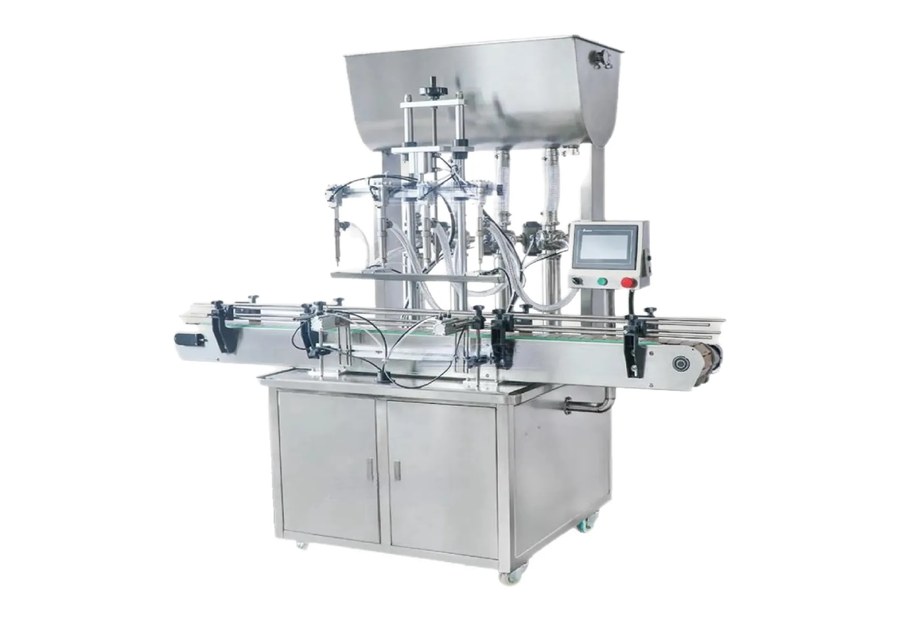
Choose automatic paste filling when manual placement becomes the bottleneck. Typical specifications include multi-nozzle filling, conveyor handling, anti-drip nozzles, touchscreen setup, product recipes and integration with capping or labelling.
The specification still starts with the product. Viscosity, temperature, solids, container opening and fill tolerance decide whether a piston, servo-piston, rotor-lobe or another positive-displacement route should be investigated.
| Feature | Why it matters for paste | What to confirm |
|---|---|---|
| Multiple nozzles | Increases output without relying on one very fast fill cycle. | Nozzle count, spacing, container pitch and change parts. |
| Volumetric filling | Gives controlled measured dosing for repeatable packs. | Required fill range, tolerance and product compressibility. |
| Hopper feed | Thick products may not feed consistently without the right hopper or pump assistance. | Hopper capacity, heating, mixing, level control and cleaning access. |
| Anti-drip shut-off | Reduces tails, smears and giveaway after each dose. | Nozzle style, product temperature and container neck size. |
| Conveyor integration | Maintains stable container movement into capping and labelling. | Container stability, sensors, rails, accumulation and speed matching. |
Automatic paste filler selection is often driven by product type, especially sauce, cosmetic cream, honey, jam and adhesive filling.
Ketchup, chutney, pesto, mayonnaise, dressings and viscous food sauces where drip control and clean jar presentation matter.
Sauce filling machines →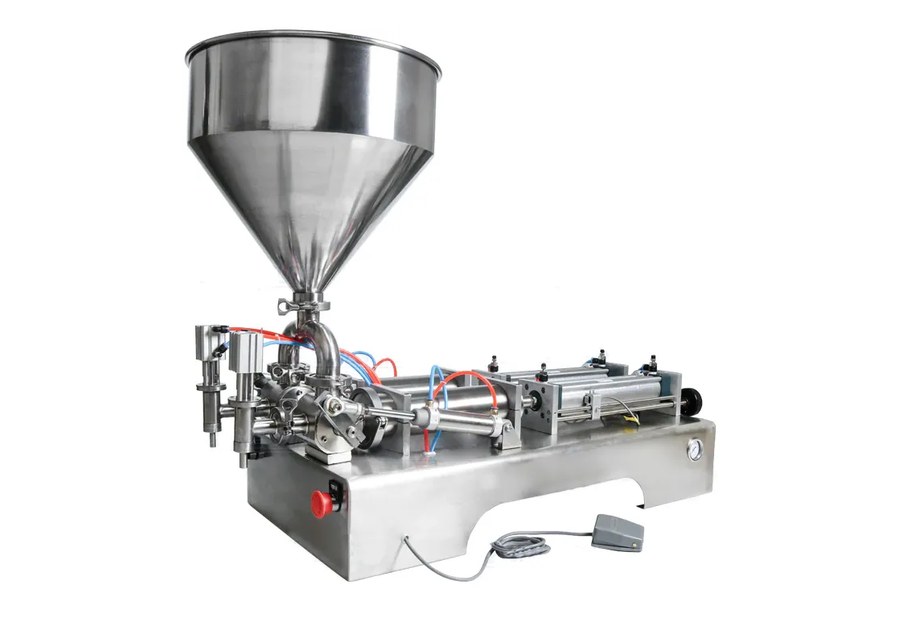
Thick, sticky and temperature-sensitive products that may need heated hoppers, careful cut-off and reliable fill repeatability.
Honey and jam fillers →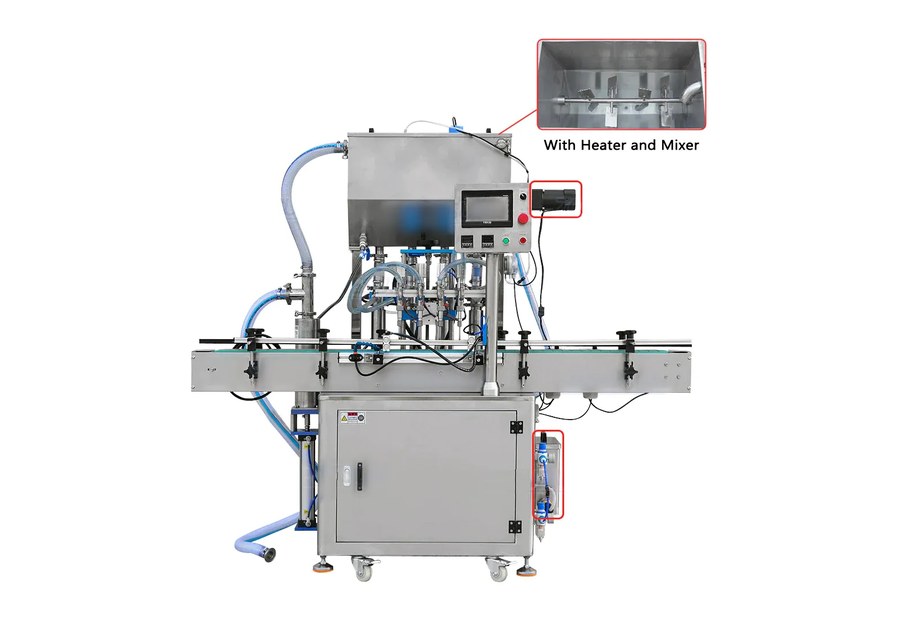
Creams, masks, lotions, gels and personal-care products where cleanability, recipe control and closure integration are important.
Cream and gel filling →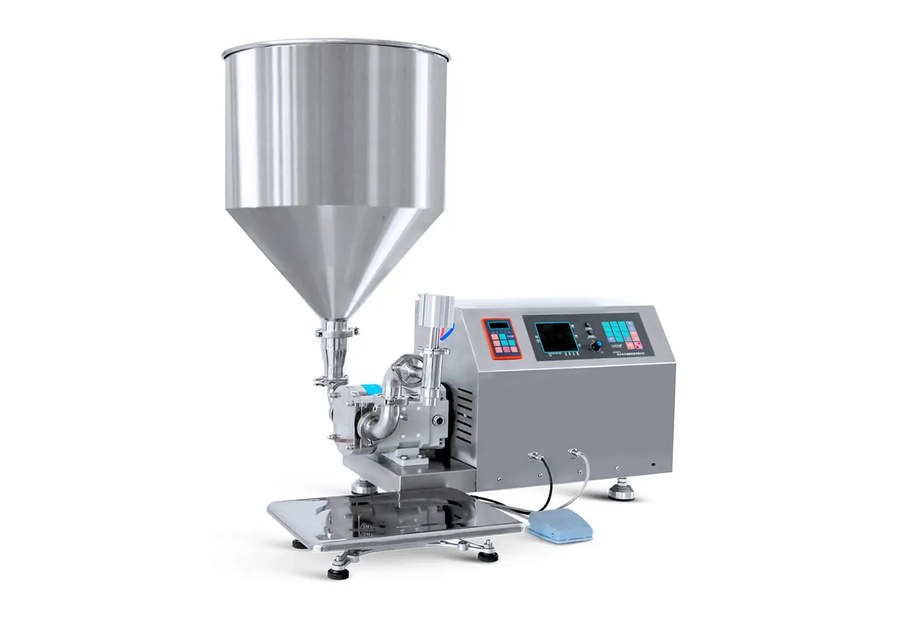
Industrial pastes, waxes, greases, adhesives and sealants where viscosity, stringing and material compatibility must be reviewed.
Industrial paste filling →Choose an automatic paste filler when output, repeatability, operator reduction or line integration justify conveyors, sensors, multiple nozzles and controlled changeovers.
Many automatic piston systems use cylinder or module ranges. The correct range should be selected around the smallest and largest fill size required.
Yes. The filler can be planned with capping, labelling, coding, conveyors and accumulation when the project needs a wider packaging line.
Lancing’s related Liquid Fillers site publishes a six-nozzle automatic piston paste filler with selectable volumetric modules. The figures below are model-reference data; the final specification must be reconfirmed for the buyer’s product, dose, container and cleaning standard.
| Item | Published reference | What still needs proving |
|---|---|---|
| Head count | Six filling nozzles. | Whether all heads can refill and discharge consistently with the actual product at the requested line rate. |
| Volume modules | 5–100, 10–300, 50–500, 100–1000, 500–3000 and 1000–5000 ml. | The correct module for every SKU, especially the lowest and highest production fills. |
| Accuracy | ≤±1% reference figure. | Product, temperature, dose, sample count, speed and measurement method must be stated for any accepted result. |
| Nozzle and product feed | Anti-drip nozzles, integrated conveyor and heated or mixed hopper options are published. | Cut-off, stringing, particles, air entrapment, hopper refill and clean-down using representative samples. |
| Cleaning | Tool-less strip-down is listed for the reference configuration. | Which wetted parts are removed, how residues are recovered, cleaning chemistry and the buyer’s verification method. |
Reference source: Lancing automatic paste filling machine. Current quotation and witnessed tests take precedence over published web data.
The filler can only maintain its design rate when containers arrive consistently and leave without restriction. Include infeed spacing, bottle or jar stability, capping, label application, coding, rejection and accumulation in the rate calculation. A faster filler does not improve output if the capper or operator remains the constraint.
Automatic production needs a repeatable feed to every dosing head. Confirm hopper level control, transfer-pump capacity, temperature control and agitation. If the product settles or aerates, test the first and last part of a realistic run rather than only a short steady-state sample.
Lightweight, tapered or wide-mouth packs may need side guides, gating or neck handling. Confirm the minimum and maximum pack dimensions, container pitch and the acceptable position below each nozzle. Product on the neck can affect closure torque and label adhesion.
Agree the product batch, fill volume, number of containers, sample frequency, output measurement and allowed rejects. Record product temperature and machine settings so the result can be reproduced after installation.
Where the project includes closures or labels, plan it as one controlled line. Lancing’s automatic filling machines site covers broader automatic line principles, while capping machines UK covers closure handling in more depth.
Supply product, production containers, closures, labels and a clear target for output and acceptance.
Prepare the product trial →Measure fill quantity, cut-off, container cleanliness, index reliability and any product change during the run.
Review nozzle cut-off →Record cleaning, product recovery, recipe settings and the conditions required to repeat the result.
Review cleaning and changeover →No. Output depends on dose, product refill time, fill profile, container indexing, product supply and downstream equipment. The result should be measured with the real product and pack.
It may cover several SKUs, but different piston modules or change parts can be required. Confirm the full range and the permitted changeover before selecting the machine.
Agree a written method stating product, temperature, dose, sample count, machine speed and whether the quantity is measured by mass or volume. Density should be controlled when mass is used to assess a volumetric dose.
Some particulate products can be handled if valves, cylinder, pipework and nozzles provide a suitable passage. The largest credible particle and its concentration should be tested.
Use it only when product evidence shows that temperature or suspension must be maintained. Heating and agitation can also change viscosity, aeration and cleaning, so the operating window must be specified.
Demonstrate repeatable filling, clean cut-off, container handling, alarms, guarding, recipe change, product recovery, cleaning access and line interfaces under agreed test conditions.
Head count and a fastest filling cycle do not describe production on their own. The agreed rate should include stable product supply, container indexing, nozzle closure, transfer to the next machine and the quality checks that decide whether a container is accepted.
| Cycle component | What to observe | What can limit accepted output |
|---|---|---|
| Product replenishment | Hopper level, transfer-pump response, temperature and agitation during a sustained run. | Heads waiting for product, air entering the path, inconsistent chamber refill or a change in viscosity as the batch stands. |
| Container infeed and gating | Spacing, stability, guide contact, sensor detection and recovery after a missing or misaligned pack. | Double feeds, unstable containers, repeated stops or a slower index needed to keep every neck below its nozzle. |
| Filling profile | Start and finish speed, nozzle height, simultaneous head behaviour and the time required for clean shut-off. | Foam, splash, product on the neck, strings, unequal refill between heads or excessive settling time. |
| Transfer to capping and labelling | Queue length, container cleanliness, cap presentation, closure application and label-ready surface condition. | A capper, labeller or coding station that runs more slowly than the filler, or rejects caused by product outside the intended fill area. |
| Stops and restart | Behaviour after low product, a blocked container, emergency stop or downstream pause. | Pressure at the nozzle, first-fill variation, lost recipe state, product tails or a surge of containers when the line restarts. |
| Inspection and rejection | Sampling frequency, checkweigh or visual checks, reject confirmation and count reconciliation where included. | Unclear acceptance rules, unverified rejects or a nominal rate that excludes the buyer’s required inspection process. |
Control functions depend on the final configuration, so the quotation and functional description should state what is included. The useful question is not whether the HMI has recipes, but which settings, alarms and recovery steps are controlled and recorded.
Define low-level detection, hopper refill, transfer-pump interlocks and the response when product condition moves outside the agreed operating window.
Where required, specify no-container-no-fill logic, gate position checks and the safe response to a fallen, missing or incorrectly spaced pack.
List the settings that change by SKU: dose, fill profile, nozzle height, timing, conveyor or gate settings and any physical change parts that software cannot replace.
Agree how product pressure is relieved, which first containers are checked, how downstream equipment restarts and how counts or rejects are reconciled after a stop.
A factory acceptance test should include a sustained run, controlled stop and restart, low-product response, recipe change, representative cleaning access and the interfaces to the intended capper or labeller. Use the product sample test, line integration guide and cleaning guide to define the evidence. For wider automatic-line requirements see Lancing automatic filling machines, and for closure-specific handling see Capping Machines UK.
Cycle rate describes how quickly the filler can complete a defined movement. Accepted output counts containers that have been filled, transferred and passed the agreed checks under normal product and line conditions.
Long enough to include stable product replenishment, repeated container indexing, normal inspection and any condition likely to change with time, such as temperature, settling or hopper level. The required quantity should be agreed before the trial.
The complete line will run at the sustainable rate of its limiting operation unless accumulation is deliberately designed to absorb short differences. A filler should be tested with realistic downstream timing rather than in isolation.
No. Recipes can store controlled settings, but different cylinders, nozzles, guides, hoses, seals or closure parts may still be required. The quotation should separate software settings from physical change parts.
An automatic paste filler should be tested through container gaps, low product level, a controlled stop, downstream blockage and restart where those conditions are within scope. Accepted output depends on how the complete line detects, stops and recovers from these events.
Record sequential fills from each nozzle so an overall average cannot conceal one head requiring adjustment.
Check container detection, indexing, no-container/no-fill logic, conveyor transfer and downstream permissives.
Define whether a restart creates double fills, skipped packs, drips, pressure surges or manual clearing work.
Use the output planning guide, FAT guide and site commissioning guide to set a complete acceptance route.
An automatic filler is only productive when product supply, nozzles, container handling and downstream equipment recover together. The following questions separate a fast dosing motion from a stable line that produces clean, accepted packs.
More heads do not improve accepted output when product supply cannot refill them consistently, containers cannot index and settle in time, or the capper, labeller or operator becomes the limiting step. The correct head count should be based on a timed line sequence with realistic minor stops and replenishment tasks.
Differences can come from trapped air, uneven product feed, hose length, valve condition, seal wear, nozzle restriction, setup or container position. Record each head separately during testing. A combined average can hide a nozzle that drifts, tails or recovers more slowly than the others.
A recipe should recall more than a target dose. Verify the associated fill profile, nozzle height, timing, container stops, sensor logic and any hopper or pump settings, then run sequential packs at the lowest and highest planned conditions. The changeover is complete only when the first accepted packs meet the agreed measurement and presentation criteria.
Define the source vessel, distance and height to the filler, product temperature, minimum and maximum feed condition, level control, pump type, stop/start logic, cleaning route and response to a downstream stop. The filler and feed system should exchange clear permissive, demand and fault signals so neither runs starved or pressurised unexpectedly.
Review product-feed options, line integration and start-up and end-of-batch waste.
Send the complete line sequence, product-feed arrangement, pack formats and accepted-output target so filling heads and interfaces can be assessed together.
The published LU-YTGt-4PX configuration combines four piston heads, a large hopper, transfer feed and conveyorised container handling. Its reference figures are useful for initial comparison, but accepted output depends on the whole line rather than the filler alone.
Four heads can deliver several doses during one indexing cycle, but the benefit is realised only when all cylinders refill consistently, all nozzles cut off cleanly, containers arrive in the correct positions and the downstream line clears each group without repeated stops.
Review the LU-YTGt-4PX reference specification alongside the paste filling line integration guide.
Automatic output is only useful when head identity, sequential pack checks, restart behaviour and reject handling are controlled. Include the measurement method and any checkweigher or trend feedback in the line specification rather than treating it as a separate quality task after installation.
Identify each nozzle or pump in the sample record so a local issue is not hidden by the line average.
Define tare, sample sequence, rejection and escalation rules before FAT and site acceptance.
Plan fill verification →