
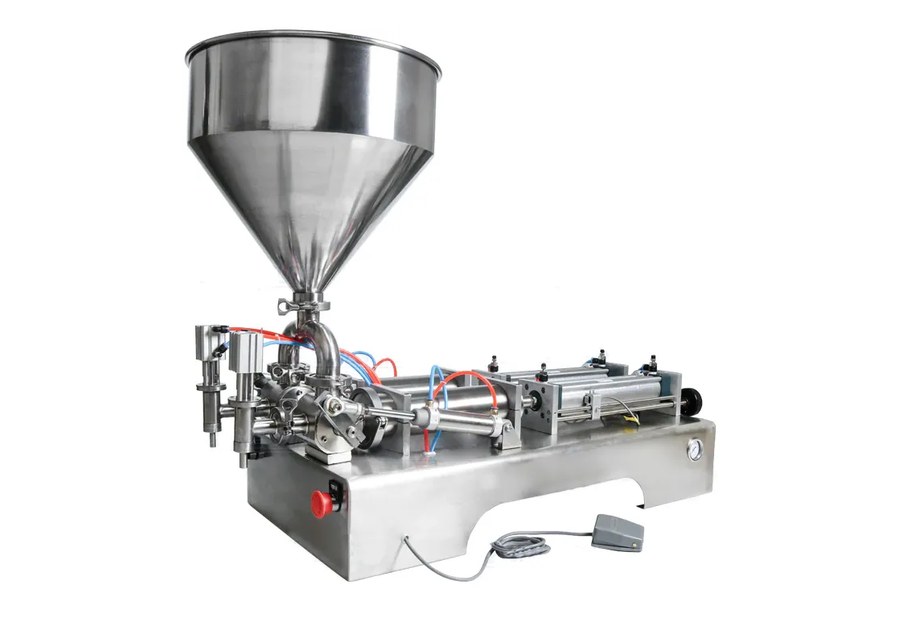
Semi-automatic paste fillers
Flexible piston filling for smaller batches, trials, contract packing and products where an operator places containers or controls each cycle.
View semi-auto route →Shortlist semi-automatic paste fillers, automatic piston filling machines, viscous liquid fillers and integrated paste filling lines around your product, container and output target.
Compare manual handling, semi-automatic filling, automatic multi-head filling and full line integration before choosing a machine route.
Flexible piston filling for smaller batches, trials, contract packing and products where an operator places containers or controls each cycle.
View semi-auto route →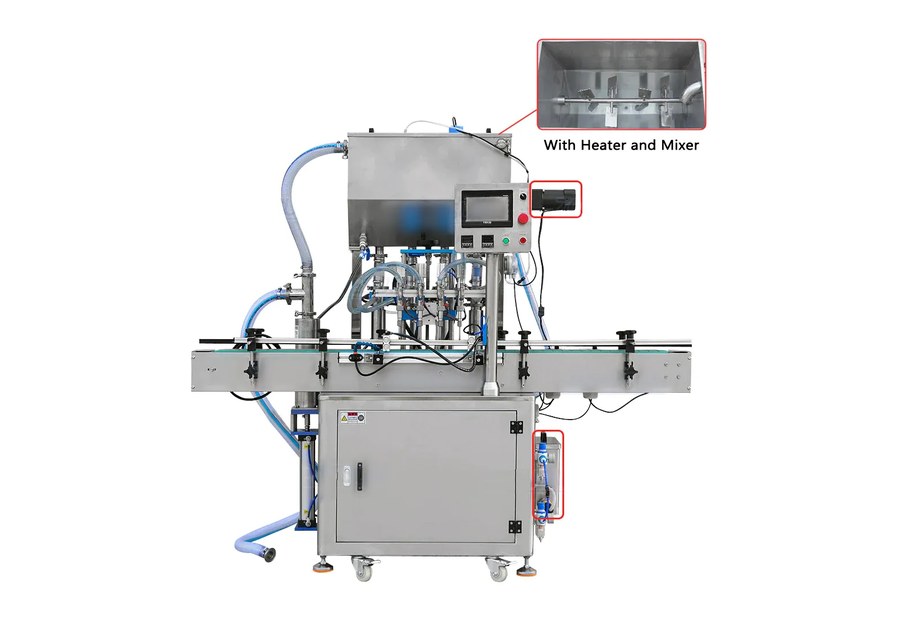
Inline multi-nozzle filling for higher output, repeatable dosing and integration with conveyors, capping, labelling and coding.
View automatic route →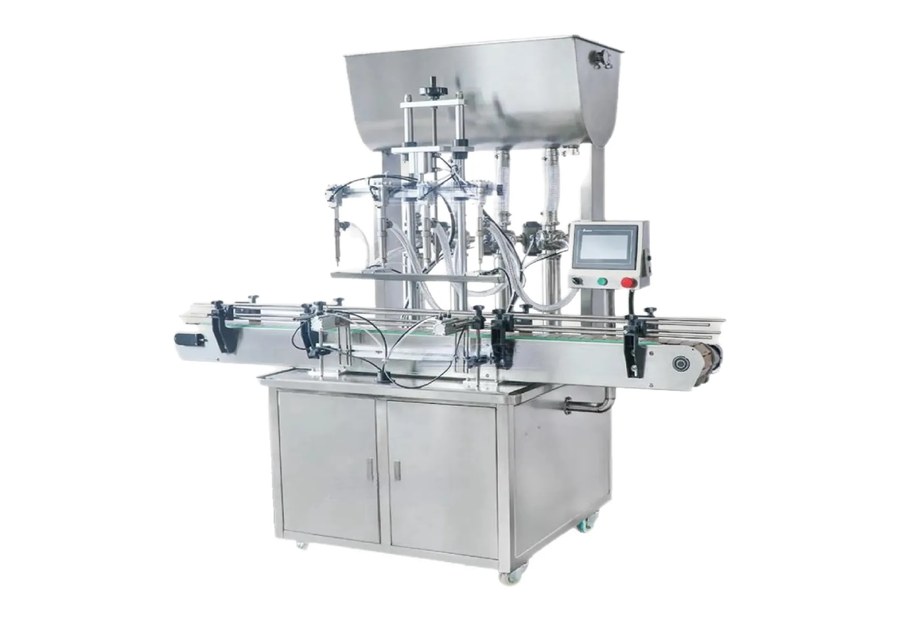
Positive-displacement volumetric dosing for sauces, creams, gels, honey, sealants and similar viscous products.
Compare piston fillers →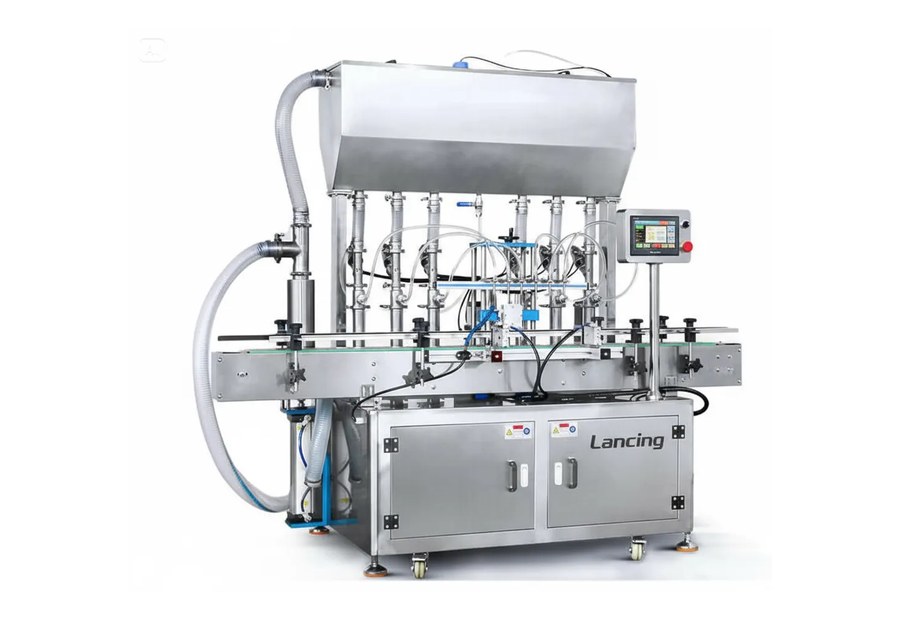
Plan the filler with closure handling, bottle stability, conveyor layout, labelling and end-of-line requirements from the start.
Plan line integration →| Route | Best fit | Typical decision points | More detail |
|---|---|---|---|
| Semi-automatic piston paste filler | Small to medium batches, trials and flexible production. | Operator handling, hopper capacity, dose module, foot-pedal or timed cycle, compressed air supply. | Semi-auto fillers |
| Automatic paste filling machine | Higher output bottle, jar or tub filling with conveyors. | Nozzle count, fill volume range, anti-drip cut-off, HMI recipes, changeovers and downstream equipment. | Automatic fillers |
| Piston paste filling | Repeatable volumetric filling of thick but pumpable products. | Viscosity, particulate size, cylinder range, cleaning access and product contact materials. | Piston fillers |
| Viscous liquid filling system | Products between liquid and paste, including lotions, shampoos, gels and detergents. | Pump style, foaming, stringing, container opening and whether a paste or liquid route is more suitable. | Viscous filling |
| Integrated paste filling line | Manufacturers needing filling, capping, labelling and conveying to run together. | Line speed, bottle stability, closure type, cap feeding, labelling position, coding and accumulation. | Line integration |
The same machine may perform differently with a cold gel, warm sauce, sticky honey or stringy adhesive. Use these checks to send the details needed for a more accurate machine recommendation.
Ketchup, chutney, pesto, mayonnaise, dressings and viscous food sauces where drip control and clean jar presentation matter.
Sauce filling machines →Thick, sticky and temperature-sensitive products that may need heated hoppers, careful cut-off and reliable fill repeatability.
Honey and jam fillers →Creams, masks, lotions, gels and personal-care products where cleanability, recipe control and closure integration are important.
Cream and gel filling →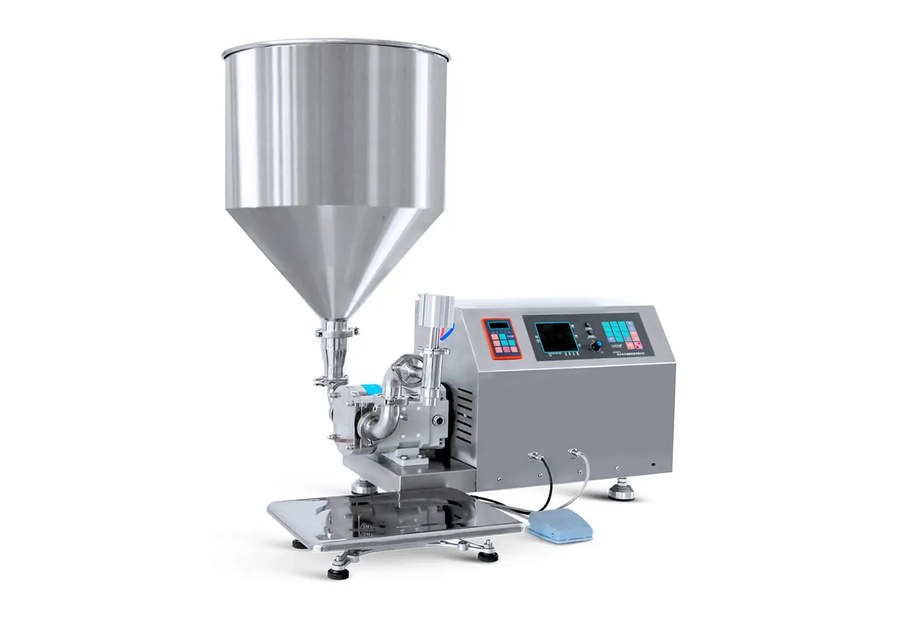
Industrial pastes, waxes, greases, adhesives and sealants where viscosity, stringing and material compatibility must be reviewed.
Industrial paste filling →Paste fillers are specified for products that do not flow like water-thin liquids. The equipment, hopper feed, pump or piston route, nozzle style and cut-off arrangement must suit the viscosity and container.
Often yes, but it depends on viscosity range, fill volume range, cleaning time, product contact parts, hopper design, nozzle size and changeover frequency.
Provide product details, fill volume, container dimensions, closure, target output, cleaning needs, available air or power, and whether capping or labelling must be integrated.
Lancing publishes several piston and pump-based configurations across its specialist machinery sites. They are useful reference points, but the final fill range, accuracy and output must be confirmed against the actual product, container and production conditions.
| Published Lancing reference | Verified configuration detail | How to use the figure |
|---|---|---|
| Automatic paste filler | Six filling nozzles; piston modules listed as 5–100, 10–300, 50–500, 100–1000, 500–3000 and 1000–5000 ml; reference accuracy listed as ≤±1%. | Use only as a starting configuration. Accuracy must be checked at the required dose with the real product, product temperature and container. |
| Semi-automatic paste filler | Pneumatic twin-head piston format with cylinder modules listed from 10–100 ml through to 1000–5000 ml. | Confirm the chosen cylinder covers every required SKU without forcing one module to work at an unsuitable extreme. |
| Rotor-lobe filling route | Published 5–5000 ml range, multi-nozzle options, stainless construction and options for heated or jacketed product paths. | Confirm particle passage, shear, cleaning method and dose control by trial. Pump range does not by itself define achievable output. |
An accuracy percentage is incomplete unless the test states the product, dose, density or weight conversion, product temperature, number of samples, machine speed, container and measurement method. For regulated net contents, agree the buyer’s own quality and legal-metrology requirements rather than relying on a generic catalogue statement.
Output depends on product refill time, piston or pump stroke, nozzle opening, container indexing, head count and downstream capacity. A meaningful result is a timed run that includes stable product supply and repeated containers, not a single fastest cycle.
Record the largest particle, typical particle concentration and whether pieces must remain intact. Valve ports, pipework, pump clearances and nozzle bore should all be reviewed. A product may be pumpable yet still block or damage at the final nozzle.
List every wetted part from hopper or feed pump to the nozzle. Decide what can be cleaned in place, what must be removed, how residual product is recovered and how the machine will be verified clean before the next batch.
Use the product sample, dose range and pack geometry to narrow the route before comparing price. This reduces the risk of buying a machine with the right headline range but the wrong valve, nozzle or cleaning arrangement.
Record temperature, viscosity behaviour, particles, aeration, settling and any sensitivity to shear or pressure.
Review viscous-product behaviour →Compare piston, rotor-lobe and other positive-displacement methods against the real product path and changeover needs.
Compare dosing technologies →Agree sample count, fill measurement, clean cut-off, output and cleaning demonstrations before the equipment is signed off.
Plan the test protocol →No. Published ranges normally use different cylinder or dosing modules. The selected module should be matched to the actual minimum and maximum fills and confirmed during a representative trial.
The dosing principle may be similar, but wetted materials, seals, cleaning, hygiene, curing risk and product recovery can be very different. Compatibility and changeover must be reviewed for each product family.
The test method should match the buyer’s quality requirement. Weight checks are often practical, but density and temperature must be considered when a volumetric dose is being assessed by mass.
Enough product is needed to prime the hopper, pump, hoses and nozzles, adjust settings and run repeated fills. The exact quantity depends on the machine path and should be agreed before the test.
Include them at the start when container stability, product on the neck, cap presentation or label application could limit the line. A filler should not be specified in isolation if downstream handling sets the true production rate.
The best shortlist starts with the worst credible production condition. A machine that fills the easiest sample may still fail when the hopper is low, the batch is colder, particles concentrate or the interval between containers increases.
| Observed behaviour | Engineering focus | Evidence to obtain |
|---|---|---|
| Slow or incomplete chamber refill | Hopper outlet, inlet valve, product head, transfer pressure and refill time. | Observation of consecutive draw strokes at the lowest normal hopper level and thickest normal product condition. |
| Particles separate, bridge or become damaged | Valve passage, pump clearance, hose and nozzle bore, agitation and residence time. | The largest credible particles at normal concentration, inspected before and after filling and across a sequence of containers. |
| Tails, strings or product on the neck | Shut-off point, suck-back, nozzle diameter, fill profile, product pressure and container movement. | Close-up video at normal temperature and the intended interval between containers, including stop-and-restart behaviour. |
| Texture changes after pumping | Shear, recirculation, pump speed, restrictions and repeated passes through the product path. | A retained unfilled sample compared with product collected after a realistic run, not only after the first fill. |
| Viscosity changes with temperature or time | Hopper heating, pipe or hose heat loss, agitation, batch hold time and startup sequence. | Product temperature and fill results at the beginning, middle and end of the operating window. |
| Product is abrasive, reactive or difficult to recover | Wetted materials, seals, cavities, dwell time, shutdown cleaning and spare product-path parts. | Written compatibility review, maximum permitted dwell time and a witnessed emptying, strip-down and restart sequence. |
A broad model range does not mean that every product and pack can share the same cylinder, valve, nozzle, seals or cleaning method. Grouping SKUs by the changes they require gives a more realistic machine and change-part specification.
Products can share a route where the selected piston or pump, valve passage, seals, hose diameter and nozzle can handle them without contamination, damage or excessive hold-up. Separate paths may be sensible for incompatible, reactive or strongly flavoured products.
Group fills that use a practical cylinder or pump setting and containers that can share guides, nozzle height and indexing. A small-dose jar and a large pail may need different modules or even a different filling principle.
Products that need different temperatures, agitation, cleaning agents or verified changeover procedures should not be treated as one easy recipe change. Record the physical parts and operating checks required for each family.
This domain should remain focused on paste and viscous-product behaviour. Use Liquid Fillers for broader free-flowing and foaming liquids, Volumetric Fillers for general volumetric dosing, Chemical Fillers where chemical compatibility or hazardous-product requirements lead the specification, Automatic Filling Machines for wider automatic-line ownership, and Bottle Filling Machines where the main intent is container-led rather than paste-led.
It exposes refill, particle passage, cut-off and temperature problems that may not appear with a warm, smooth or freshly mixed sample. The worst credible batch should still be normal saleable product, not an artificial extreme.
It is a group of SKUs that can use the same basic wetted path and operating method with defined changes such as settings, cylinder module, nozzle or container guides. The grouping should be based on engineering changes, not only marketing names.
Consider them where flavour, colour, chemistry, cure risk, cleaning validation or turnaround time makes a shared path difficult. The quotation should identify which parts are dedicated and how they are stored and verified.
Give both the same product and pack information, require the same trial conditions and compare accepted output, dose evidence, cut-off, product recovery, cleaning, change parts, exclusions and downstream scope rather than head count alone.
A fair comparison uses the same product batch, temperature, dose, pack, measurement method and accepted-output definition for every candidate technology.
| Decision | Evidence to request | Reason |
|---|---|---|
| Dosing method | Sequential results at the lowest and highest required fill with the real product. | Shows refill stability, head-to-head variation and whether the selected displacement range is practical. |
| Product path | Valve, hose, pump or cylinder and nozzle arrangement, plus a representative product trial. | Exposes restrictions, particle damage, aeration, heating and cleaning access. |
| Automation level | Accepted packs per hour including loading, indexing, capping, labelling and minor stops. | Prevents a fast dosing stroke being mistaken for sustainable line output. |
| Lifecycle fit | Change parts, cleaning sequence, maintenance access, spares and future formats. | Determines whether the machine remains practical after the first product is launched. |
Use the technical resource centre to prepare a specification, sample trial, FAT and commissioning plan.
The name of the machine is less important than the conditions it must reproduce. These answers focus on the restrictions, feed method, pack presentation and product recovery that often decide whether a paste filler remains practical after the demonstration.
Check the smallest or most complex product passage that the real product must cross: an inlet valve, outlet valve, hose bend, pump clearance or nozzle. The largest normal particle, fibre or agglomerate must pass without blockage or unacceptable damage, and the surrounding paste must still refill the dosing path consistently.
Hopper feed can be simple and easy to inspect when product can be loaded close to the filler and enters the dosing chamber reliably. Pump feed can reduce manual handling or connect a remote vessel, but introduces suction, pressure, control, hold-up and cleaning questions. Both routes should be compared with the real product and expected production pauses.
It may, but the nozzle, fill position, container guides and fill profile can be different. A wide jar can accept a larger nozzle and shorter fill path, while a narrow-neck bottle may need tighter alignment, a smaller or diving nozzle and more control of tails and air. Treat the pack formats as separate trial conditions until proven.
Product left in a hopper, cylinder, pump, hose or manifold becomes waste, cleaning load or cross-contamination risk. On short batches, the value and volume of retained product can matter more than nominal cycle speed. Record start-up, normal running and end-of-batch recovery when comparing machine routes.
Compare hopper-fed and pump-fed paste filling, use the paste filling nozzle selection guide, and review product-waste reduction.
Provide the product, pack, fill range, cleaning expectation and target accepted output so the shortlist can be based on the complete process rather than a machine label.
These Lancing reference configurations show how nozzle count, container movement and product feed change the application. Published figures remain conditional on the real product, fill volume, container and acceptance method.
| Configuration | Published structure | Published reference range | Decision to confirm |
|---|---|---|---|
| LU-GT1 | Single-nozzle pneumatic piston filler | 10–100 ml through 1000–5000 ml cylinder options; 5–20 bottles/min reference | Whether manual container placement and the selected cylinder/nozzle suit the product and batch size. |
| LU-GY1C | Single-head pneumatic filler with 2 m conveyor | 5–100 ml through 1000–5000 ml options; 10–20 bottles/min reference | Whether conveyor presentation, bottle detection and one filling head remove the current handling constraint. |
| LU-YTGt-4PX | Four piston heads, large hopper and transfer feed | 5–100 ml through 1000–5000 ml options; 20–50 bottles/min reference | Whether product supply, four-lane dosing, container indexing and downstream equipment can sustain accepted output. |
Do not treat a published accuracy figure as an application guarantee. Record the product temperature, fill target, sample sequence, measuring method, container handling and number of active heads when the configuration is tested.
These three decisions influence utilities, changeover, quality evidence and lifecycle cost even when the same broad filling principle is being compared.
Compare servo and pneumatic piston routes against recipe control, utilities, maintenance and operator workflow.
Servo versus pneumatic guide →State the measurement method, product condition, tare and sequential sample plan.
Accuracy and weight checks →Map particles, close clearances, seals, bends and replaceable wear parts before approval.
Abrasive paste guide →