
Stringing control
Industrial pastes may tail after the fill. Nozzle cut-off, product temperature and dosing speed need review.
Specify industrial paste filling equipment around stringing, material compatibility, viscosity, containers, cleaning and safety review.
Tell us about compatibility, solvent content, viscosity, container format and site conditions so the right filling method can be reviewed before machine selection.
Industrial pastes may tail after the fill. Nozzle cut-off, product temperature and dosing speed need review.
Wetted parts, seals and hoses must be checked against the product and cleaning chemicals.
Solvent-based, flammable or aggressive products may require additional controls, documentation or ATEX review.
Move from your product route to semi-automatic machines, automatic filling lines, piston fillers or the quote form without guessing where to go next.
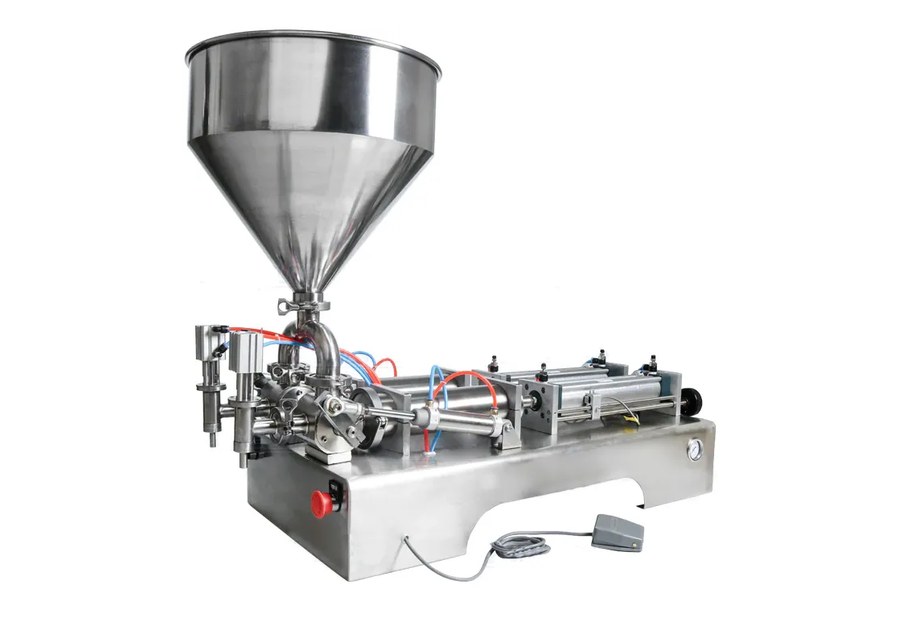
Flexible piston filling for smaller batches, trials, contract packing and products where an operator places containers or controls each cycle.
View semi-auto route →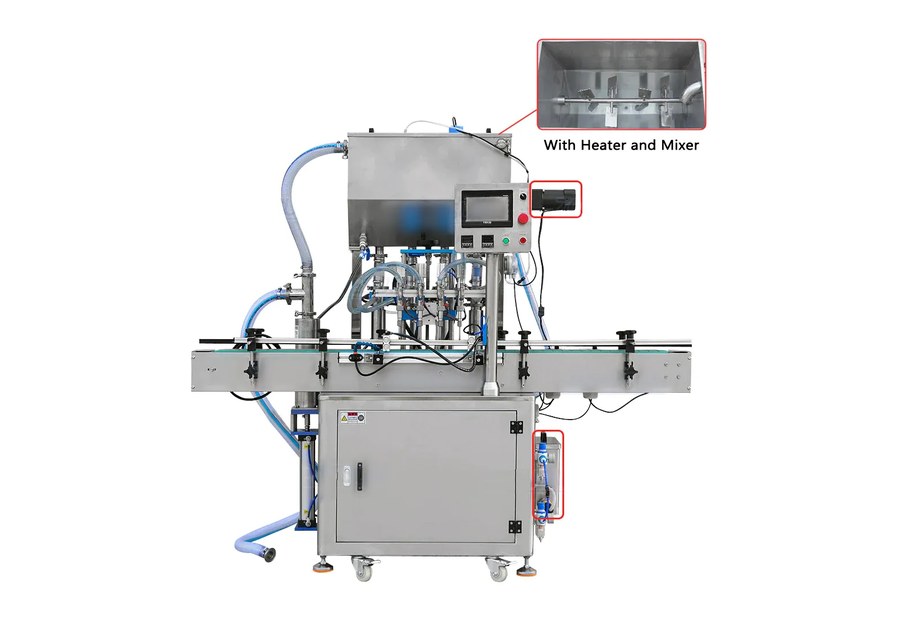
Inline multi-nozzle filling for higher output, repeatable dosing and integration with conveyors, capping, labelling and coding.
View automatic route →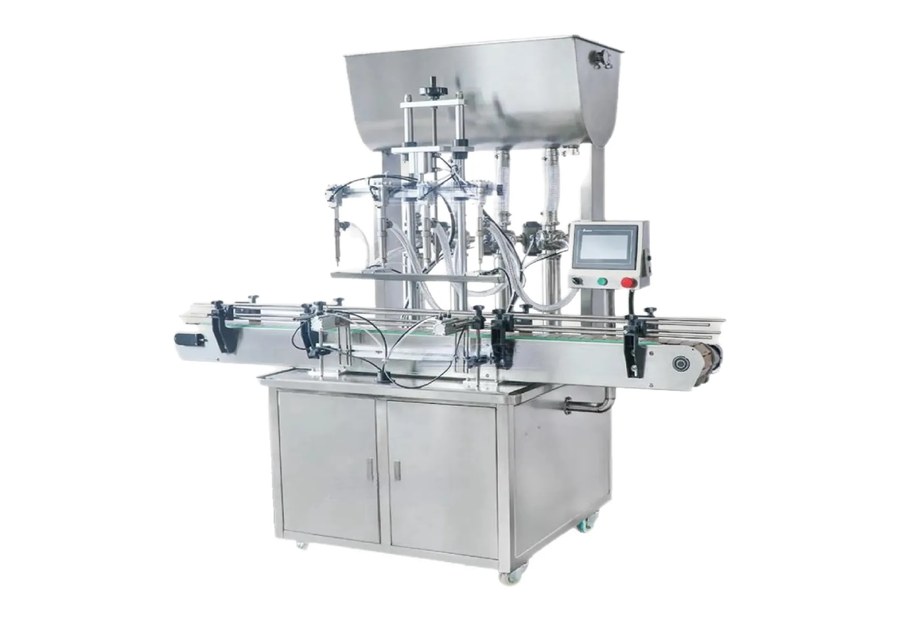
Positive-displacement volumetric dosing for sauces, creams, gels, honey, sealants and similar viscous products.
Compare piston fillers →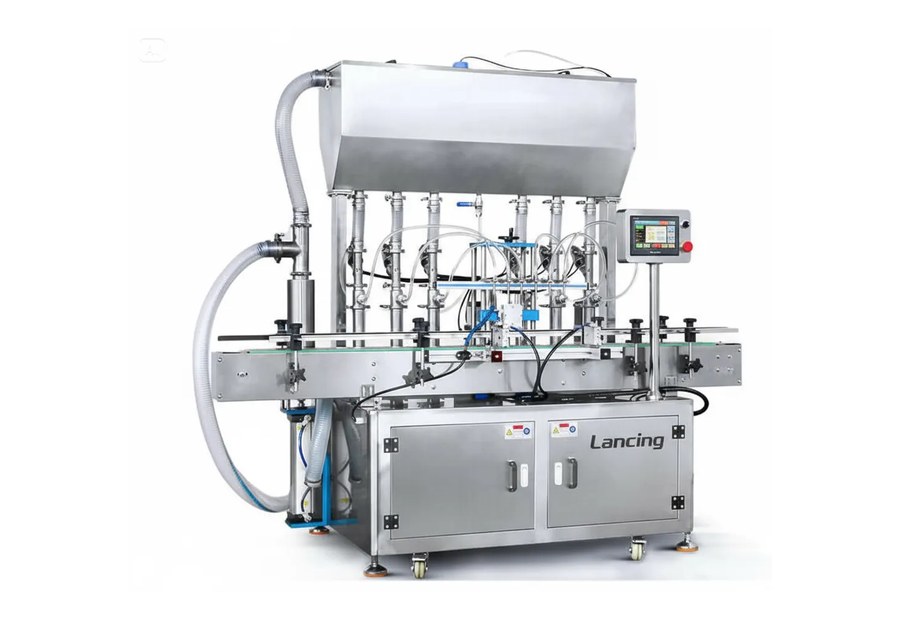
Plan the filler with closure handling, bottle stability, conveyor layout, labelling and end-of-line requirements from the start.
Plan line integration →Some adhesives, sealants, waxes, greases and industrial pastes can be filled with paste filling equipment, but material compatibility and product behaviour must be checked.
Stringing, curing, solvent content, abrasiveness, high viscosity and cleaning can all affect the filler route.
Yes. Solvent, flammable or aggressive products may require material compatibility and hazardous-area assessment before any equipment is specified.
Adhesives, sealants, greases and resins may be thick, abrasive, reactive or difficult to recover. A machine that can move the product is not automatically suitable for repeated production. The specification should address wetted materials, maximum dwell time, dead legs, pressure and the approved cleaning method.
Provide the product safety data and known compatible materials. Review piston seals, pump seals, hoses, valve seats and cleaning agents. Where the project includes hazardous or corrosive chemistry, use the specialist Lancing chemical filling machinery route for the wider safety assessment.
State how long the product can remain in the hopper, hose, pump and nozzle during stops. Define the shutdown sequence and whether components must be flushed, capped, purged or removed before the product sets.
Adhesives can create long tails after cut-off. Test nozzle shut-off, suck-back, pressure release and container separation. Product on threads or cartridge rims can affect closure, sealing and customer use.
High-value or difficult products make hold-up important. Map the residual volume and agree how saleable product is recovered. Cleaning should be demonstrated with the approved method rather than inferred from a generic stainless construction claim.
| Risk | Specification question | Required evidence |
|---|---|---|
| Reaction or cure | What is the maximum safe dwell time in each part of the path? | Product data, stop-time test and written shutdown procedure. |
| Abrasion | Are fillers or particles likely to wear seals, valves or pump surfaces? | Product composition, particle data and material review. |
| Pressure | Can the product be moved without leakage, heating or excessive stringing? | Trial pressure, pump speed, hose layout and cut-off video. |
| Cleaning | Can residues be removed with the approved solvent or process? | Demonstrated strip-down, flush volume, inspection and restart result. |
Compare piston, rotor-lobe and progressive-cavity routes against the actual material. Include cartridges, tubs, pails or bottles and their closures in the trial so cut-off and pack handling are proved together.
Review pressure, shear, seals, particles and dead volume.
Compare positive displacement →Review shut-off, suck-back, tail length and the pack opening.
Compare nozzle cut-off →Review recovery, flush, strip-down and restart with the approved method.
Plan clean-down →The dosing principle may be similar, but compatibility, curing, seals, pressure, cleaning and operator protection can be very different. The product must be reviewed specifically.
How long the product can safely remain in the wetted path and what action is required before it skins, cures or becomes difficult to remove.
Test shut-off nozzle design, suck-back, pressure release, nozzle height, separation speed and product temperature. No single feature guarantees a clean cut.
Supply the safety data sheet, technical data, known compatible materials, cleaning method, cure or skin time and any restrictions on heat or shear.
Measure the product remaining in the hopper, pump, hoses, valves and nozzle after drain-down. Agree what can be recovered and what becomes waste.
Use the chemical site when hazardous area, corrosive material, solvent, fumes, SDS or wider chemical-safety requirements dominate the project rather than paste behaviour alone.
Adhesives and sealants can be stringy, abrasive, reactive, moisture-sensitive, temperature-dependent or difficult to remove after cure. Use the current product and cleaning safety information to define contact materials, seals, hoses, isolation, waste and maintenance access.
| Issue | Question for the trial | Project information |
|---|---|---|
| Stringing and cure | Can the nozzle close cleanly at the real dwell time, and what happens during a stop? | Open time, cure mechanism, approved purge or cleaning method and longest normal pause. |
| Material compatibility | Are all wetted seals, hoses and metals suitable for product and cleaning agents? | Current SDS and written compatibility requirements from the product owner. |
| Pressure and feed | Can the product refill or feed without cavitation, air, leakage or unsafe pressure? | Viscosity at temperature, supply vessel, feed method and allowable pressure conditions. |
| Container and closure | Does the pack remain clean and stable through filling, capping, lidding or cartridge handling? | Production samples, opening, closure, headspace and presentation standard. |
Use the risk-assessment input guide, nozzle guide and sample trial guide.
Industrial pastes can react with air, moisture, heat or product-contact materials, and can become difficult to remove during a stop. The filling method must therefore include the feed, wetted path and shutdown procedure rather than only the dosing action.
The product contacts seals, hoses, valves, pump or cylinder parts and nozzles, not just the stainless frame. Review the product safety data and supplier compatibility information for every wetted material, including cleaning agents and expected temperature. A single incompatible elastomer can cause swelling, leakage, contamination or premature failure.
First define what triggers curing or skin formation and how long the product can remain stationary. The solution may involve a closed feed, reduced air exposure, purge or recirculation procedure, removable nozzle tip, controlled temperature or a maximum stop time. The method must be agreed from product evidence and tested safely.
A filler that runs well but cannot be emptied, isolated or cleaned within the product working time may be impractical. Define normal shutdown, short stops, emergency stops and end-of-batch recovery, including where residual product goes and which parts need removal before curing or hardening.
A closed feed may be preferable where air, moisture, solvent loss, contamination or operator exposure must be controlled, or where product comes from a drum, pail or vessel. It adds pressure, connection, level, cleaning and safety considerations that must be integrated with the filler controls and site assessment.
Compare open-hopper and pump-fed routes, plan product recovery, and use the existing cleaning and changeover guide.
Send the safety data, product condition, pack, working time, cleaning method and shutdown expectations so compatibility and recovery can be considered before a machine route is proposed.
Sealants, resins, mastics and compounds may contain mineral fillers or hard pigments that accelerate wear. Record particle information, batch duty, curing behaviour, carrier chemistry and the current safety data before the pump, seals, valves, hoses and spares are approved.
Use the complete wetted-parts schedule, including non-metal seals, hoses and valve seats.
Review wetted parts →Define what can be inspected in a trial and what must be monitored across production cycles.
Review abrasive duty →