
Particles and inclusions
Seeds, herbs, onion pieces or chilli flakes can change the valve and nozzle choice. Ask for product samples where possible.
Choose sauce filling equipment around viscosity, temperature, particles, clean jar presentation, nozzle cut-off and hygienic clean-down.
Start with the product behaviour, then match the filler to your sauce, container, fill volume, clean-down routine and output target.
Seeds, herbs, onion pieces or chilli flakes can change the valve and nozzle choice. Ask for product samples where possible.
Filling temperature affects viscosity, product flow, container handling and cleaning. The machine route should be reviewed around the real process.
Food applications need practical access to contact parts, clear cleaning routines and material choices suitable for the product.
Move from your product route to semi-automatic machines, automatic filling lines, piston fillers or the quote form without guessing where to go next.
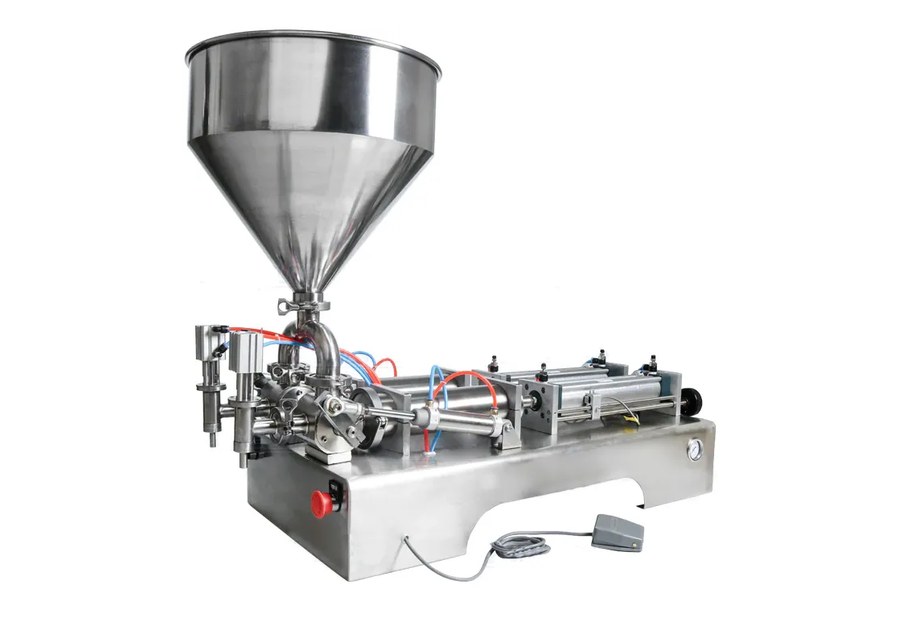
Flexible piston filling for smaller batches, trials, contract packing and products where an operator places containers or controls each cycle.
View semi-auto route →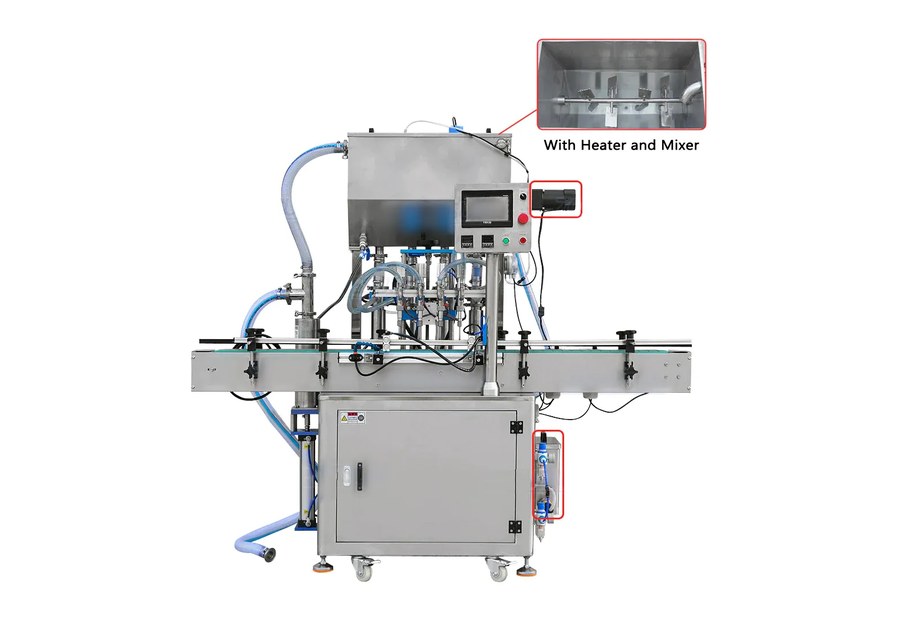
Inline multi-nozzle filling for higher output, repeatable dosing and integration with conveyors, capping, labelling and coding.
View automatic route →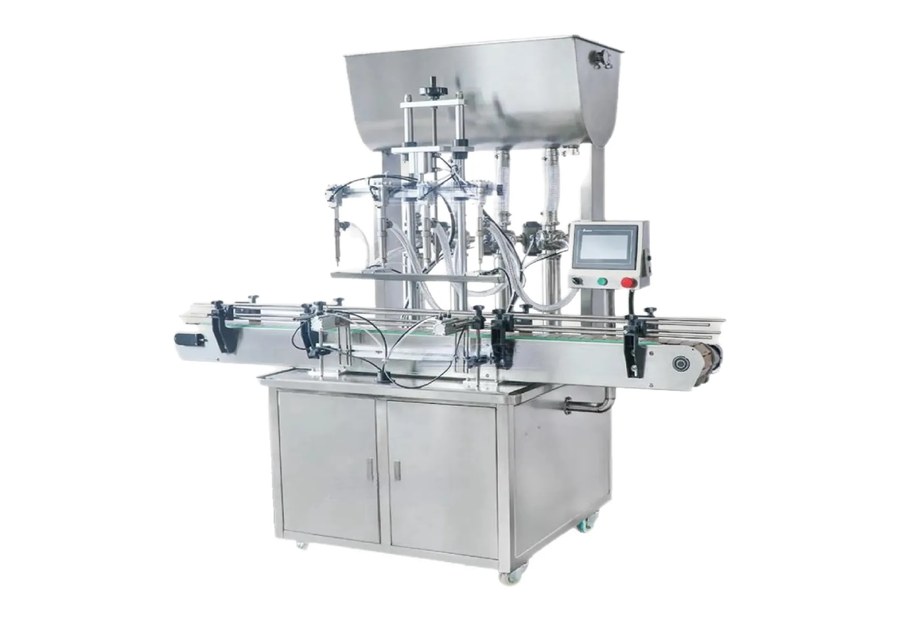
Positive-displacement volumetric dosing for sauces, creams, gels, honey, sealants and similar viscous products.
Compare piston fillers →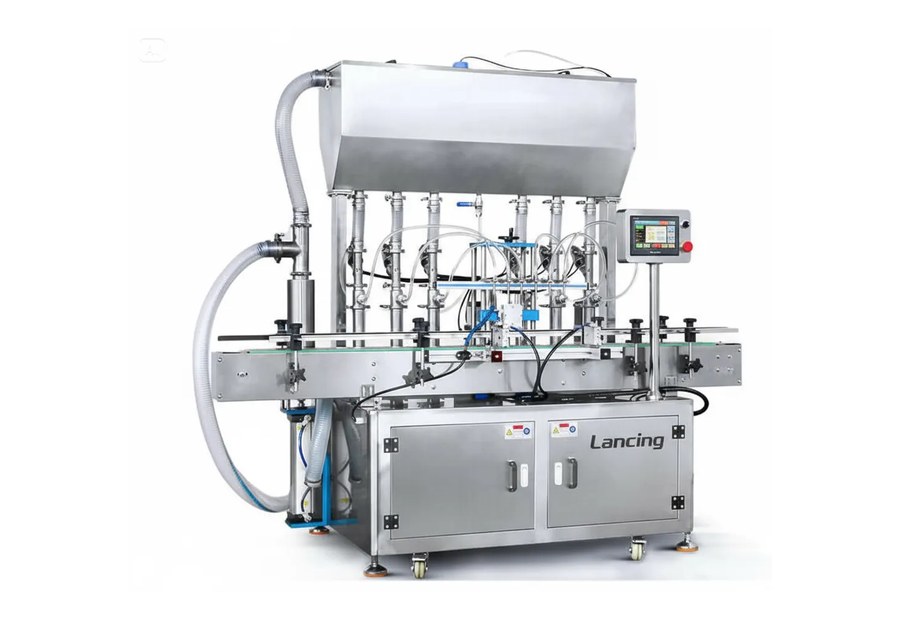
Plan the filler with closure handling, bottle stability, conveyor layout, labelling and end-of-line requirements from the start.
Plan line integration →Sauce filler suitability depends on viscosity and particles, but common enquiries include ketchup, pesto, mayonnaise, chutney, relish, dressings and cooked sauces.
Yes, subject to container review. The neck opening, stability, fill volume and presentation standard decide the nozzle and handling route.
Some sauces, honey and sticky products may need heat or agitation to maintain flow, but this should be reviewed against the recipe and filling temperature.
Ketchup, mayonnaise, chutney, pesto and dressings can look similar in a product list but behave differently through a valve and nozzle. The shortlist should be based on the most difficult normal batch, not the easiest smooth sample.
Piston filling is often considered where a measured dose and clean cut-off are required. Confirm whether the sauce aerates during mixing, changes viscosity with temperature or leaves a tail after the nozzle closes.
Measure the largest herb, seed, fruit or vegetable piece and compare it with valves, pump clearances and the nozzle bore. Test whether pieces remain intact and whether they distribute consistently between containers.
Record the temperature window and how quickly the product thickens. Heating the hopper or product path can help maintain flow, but it also affects seals, operator protection, cleaning and the final container.
The nozzle must fit the opening and leave enough headspace for the lid or cap. Product on the thread or neck can compromise closure application and downstream labelling.
| Trial check | Acceptance question | Record |
|---|---|---|
| Dose | Does the filler meet the agreed quantity tolerance under stable production conditions? | Sequential fill results, product temperature and machine setting. |
| Particle distribution | Do pieces pass without damage, blockage or separation from the sauce? | Largest particle, sample photographs and inspection of filled packs. |
| Cut-off | Is the neck or rim clean enough for closure and label handling? | Close-up video and reject count over a timed run. |
| Clean-down | Can allergens, flavours and residues be removed within the planned changeover? | Strip-down sequence, cleaning method and verification check. |
Consider product feed, filling, closure application, coding, label area and cleaning as one process. For broader food liquids outside paste filling, see Lancing food and drink filling machines.
Define how sauce reaches the hopper and how air is removed before good containers are counted.
Compare semi-automatic filling →Balance the filler with jar or bottle infeed, capping and accumulation.
Compare automatic filling →Use representative temperature and particles to prove cut-off and repeatability.
Plan a sauce trial →Potentially, if the complete product path is sized for the largest pieces. A representative sample should be tested for blockage, damage and even distribution.
Temperature can change viscosity, fill time and cut-off. Record the normal production range so trial results can be repeated.
Review nozzle diameter, shut-off, suck-back, fill profile, container position and product pressure together. A close-up trial is more reliable than selecting a nozzle by name.
Weight checks are often practical, but the acceptance method should account for density and temperature when the machine doses by volume.
Possibly, but the valve and nozzle suitable for smooth ketchup may not pass chutney pieces. The changeover and cleaning route must also be confirmed.
Supply the thickest normal batch, the largest expected pieces, production containers and closures, and enough product for priming plus a repeated timed run.
A sauce should be tested in the condition that is most likely to expose refill, particle, temperature and cut-off problems while remaining representative of normal saleable production. A smooth warm sample alone can hide the limits that appear on a colder or more particulate batch.
| Sauce condition | Main filling risk | Trial evidence |
|---|---|---|
| Smooth high-viscosity sauce | Slow chamber refill, air pockets, long discharge time or a tail after the nozzle closes. | Sequential fills at normal hopper level and temperature, with close-up cut-off video and recorded cycle timing. |
| Seeds, herbs or fine inclusions | Settling, uneven distribution, restrictions at valves or nozzle and an inconsistent visual pack. | Samples from the beginning and end of the batch, particle condition after filling and distribution across repeated containers. |
| Larger soft pieces | Bridging, crushing, blockage or a piece holding a valve or nozzle partly open. | The largest credible pieces at normal concentration, inspected before and after passage through every restriction. |
| Temperature-dependent sauce | Viscosity and cut-off change as the product cools or warms in the hopper and pipework. | Product temperature at the filler and fill results across the full intended operating window, including stop and restart. |
| Aerated or emulsified sauce | Compressible air changes apparent volume, creates foam or changes density during a weight check. | Mixing method, standing time, visible bubbles, density condition and an agreed delay before measurement. |
| Sticky sauce in a small opening | Product on the thread or rim affects closure application, appearance or downstream label handling. | Nozzle alignment, neck clearance, headspace, cut-off and closure application using production containers and lids. |
Fill quantity is one part of a good sauce pack. The acceptance sheet should also cover neck or rim cleanliness, headspace, closure presentation, label area and the condition of inclusions after filling.
Confirm that product does not prevent the lid or cap from seating correctly. Check the intended interval between filling and closure application, because strings or settling can appear after the nozzle has moved away.
Agree the target presentation and whether foam, trapped air or product settling changes the visible level. A volumetric dose and a visual fill line are not automatically the same requirement.
Inspect the outside of the container for product transfer from nozzles, guides or operators. The surface must be suitable for the planned label, code or sleeve process.
Where required, inspect the pack after the product has settled and after closure application. Retain representative accepted and rejected examples with the trial record.
Recipe change and cleaning should follow the buyer’s own food-production procedures. Map allergens, flavours, colours and particulates through the hopper, valves, pump or cylinder, hoses and nozzles; then prove emptying and restart with the intended method. Use the heated hopper guide, nozzle guide, cleaning guide and sample trial guide to define the test.
The product supply and agitation method should maintain uniformity without damaging the sauce or adding air. Compare containers from different points in the batch and record hopper level and residence time.
No. Define the intended filling window and test the conditions most likely to affect flow and cut-off. Record the temperature at the filler rather than relying only on the cooking or holding-vessel setting.
Yes, when the measurement method accounts for density, temperature and trapped air. Agree whether the acceptance requirement is net mass, delivered volume or both and record the basis used.
Keep the product condition, pack specification, machine settings, fill results, cut-off video, particle observations, accepted and rejected samples, cleaning sequence and any limits that still require site confirmation.
Sauce behaviour can change with temperature, particle distribution, aeration, time after mixing and hopper residence. A smooth reference sample does not prove a production batch containing the expected pieces or fibres.
Compare the largest normal piece with the inlet, valve, chamber, hose and nozzle openings and inspect for damage or separation.
Check nozzle cut-off, fill height, pack opening and time before lidding or capping.
Test only within the product owner's approved filling conditions and record how flow changes through the run.
See the particle-handling guide, nozzle guide and sample trial protocol.
Sauce filling depends on more than thickness. Particle size and concentration, temperature, settling, headspace and the cleanliness of the jar or bottle rim can all change the accepted pack. These questions help define representative trials.
Use product containing the largest normal particle or inclusion at a representative concentration, not a strained or specially selected sample. Measure the particle in more than one orientation where shape matters, then inspect the inlet, valve and nozzle path for passage, damage and separation during repeated fills.
Rim smearing can come from a poorly centred nozzle, excessive drop height, a product tail, overfill, container movement or sauce already on the incoming pack. Diagnose the point at which contamination appears and test nozzle position, cut-off and container control together rather than treating it as a capping problem alone.
Define how quickly solids or phases separate at the normal filling temperature and during expected production pauses. Trial the start, middle and end of the batch, and assess whether gentle agitation, recirculation or revised batch handling maintains uniformity without damaging particles or introducing air.
A wider, smoother path is usually the first consideration when particles, fibres or a highly structured sauce are restricted. Adding pressure can increase leakage, particle damage, heating or sudden discharge without resolving the true bottleneck. The safe choice should be demonstrated with the hardest normal product condition.
See the guides to settling and separation, container-neck cleanliness and representative sample trials.
Send the normal and hardest product conditions, largest inclusions, fill range, pack and closure so particle passage and finished-pack presentation can be assessed together.
Mustard, dairy, egg, nut, sesame and other recipe differences can change the site’s allergen-control requirements. Map product hold-up through the hopper, pump or cylinder, valves, hoses, nozzles and any contaminated container-contact surfaces, then define disassembly, cleaning, inspection and release evidence.