
Temperature and flow
Sticky products can change behaviour when warm or cold. Quote requests should include filling temperature.
Compare honey fillers, jam filling machines, preserve filling and syrup-like products where clean cut-off and flow control matter.
Review hopper feed, product temperature, jar handling, fill range, cut-off and clean-down before selecting the machine route.
Sticky products can change behaviour when warm or cold. Quote requests should include filling temperature.
Honey and jam need controlled discharge to avoid strings, drips and sticky jar rims.
Wide-mouth jars, squeeze bottles and tubs each create different filling and capping considerations.
Move from your product route to semi-automatic machines, automatic filling lines, piston fillers or the quote form without guessing where to go next.
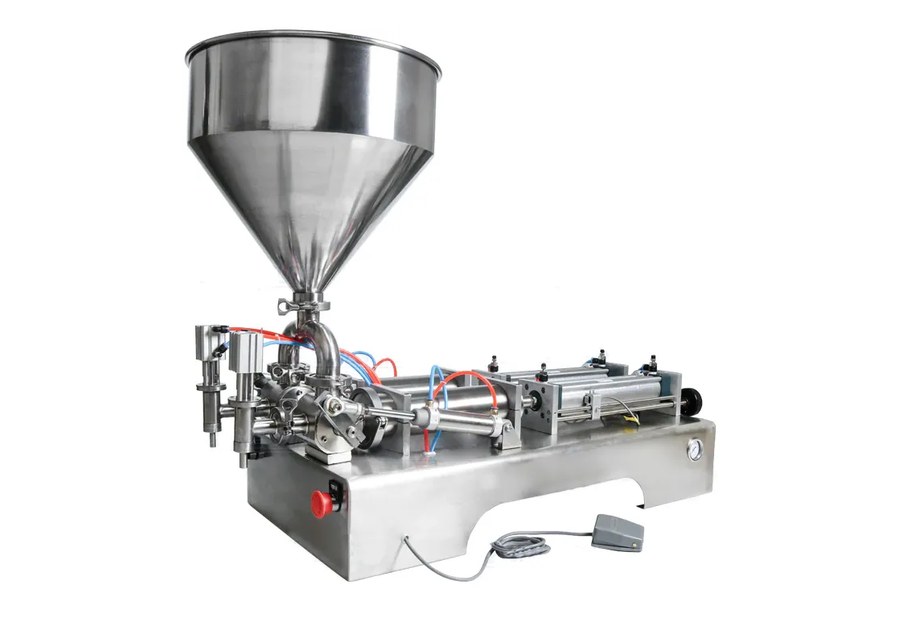
Flexible piston filling for smaller batches, trials, contract packing and products where an operator places containers or controls each cycle.
View semi-auto route →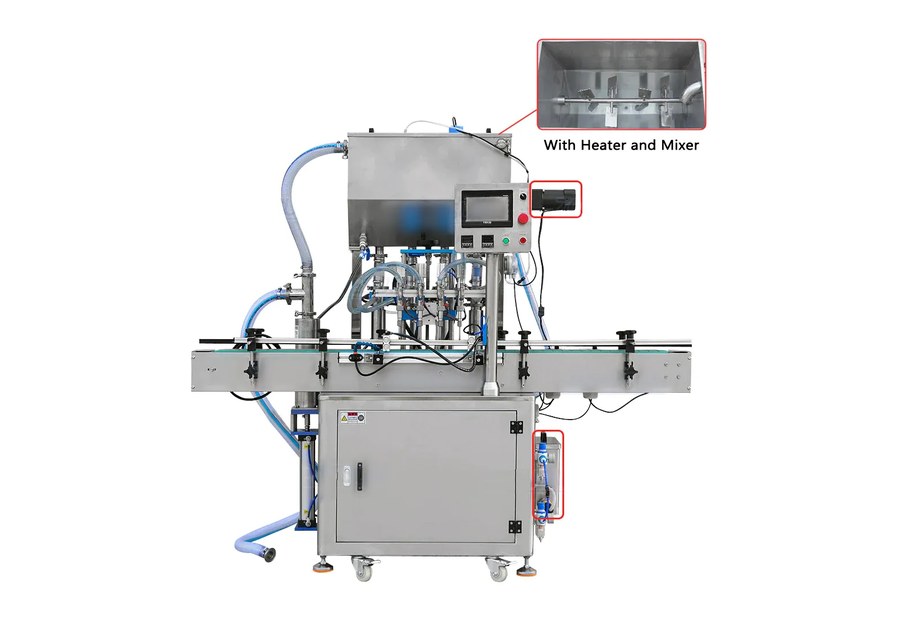
Inline multi-nozzle filling for higher output, repeatable dosing and integration with conveyors, capping, labelling and coding.
View automatic route →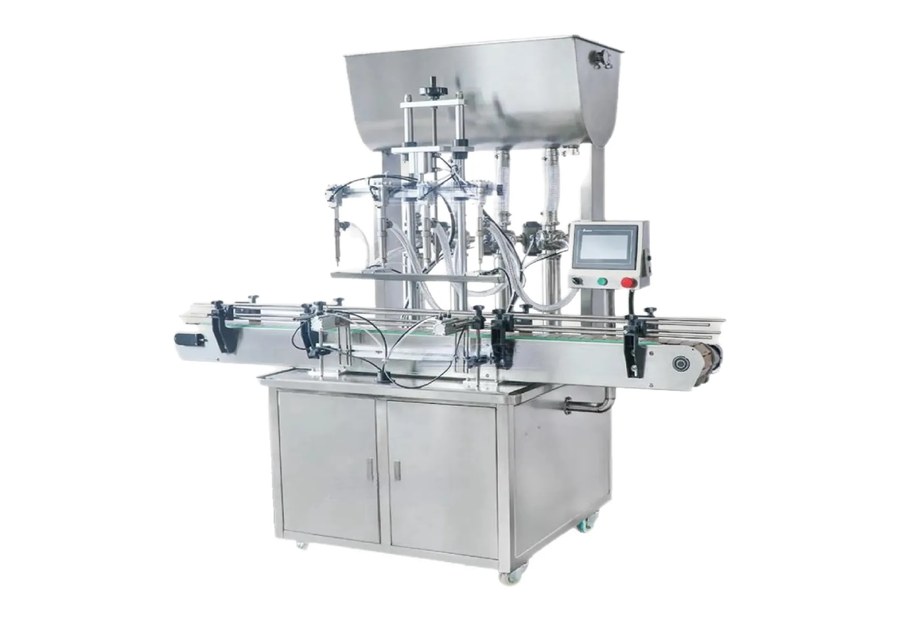
Positive-displacement volumetric dosing for sauces, creams, gels, honey, sealants and similar viscous products.
Compare piston fillers →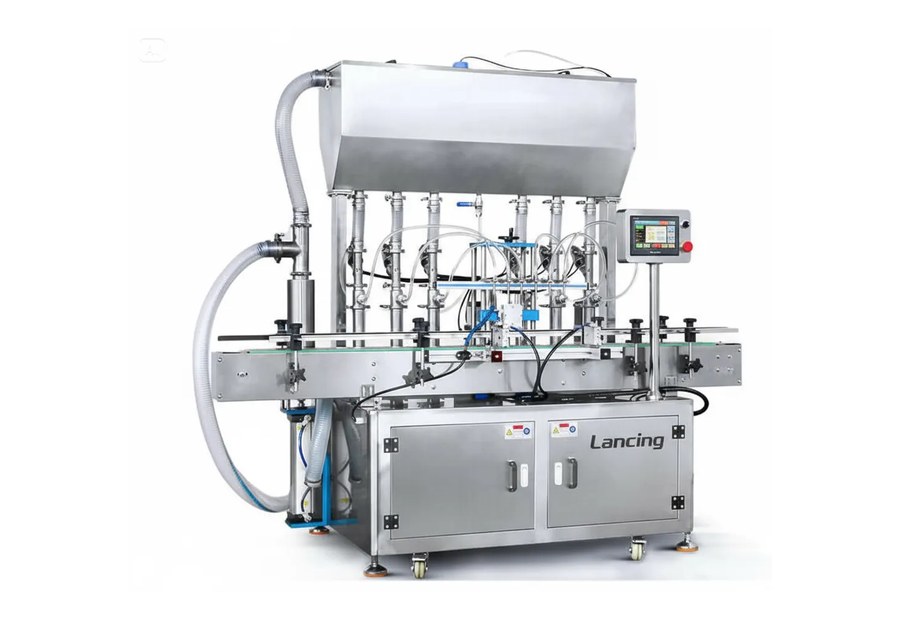
Plan the filler with closure handling, bottle stability, conveyor layout, labelling and end-of-line requirements from the start.
Plan line integration →Yes, honey is a common viscous product enquiry. Flow varies with temperature and product type, so heated hopper or feed options may need review.
It may, but fruit pieces, seeds and product consistency must be checked because particles can change the required valve and nozzle route.
Jars, bottles and tubs may be possible, but container diameter, neck size and stability should be supplied for a proper quotation.
Honey, jam, preserves and thick spreads can change markedly with temperature. Jam may also contain fruit pieces or seeds, while honey can string and continue to flow after the valve closes. The trial should reproduce the normal production window rather than using an unusually warm or filtered sample.
Define the temperature at which the product leaves preparation, enters the hopper and reaches the nozzle. Test the coldest normal condition as well as the preferred set point, because fill time and stringing can change during a batch.
Measure the largest piece and confirm whether it must remain intact. Valve ports, pump clearances and the final nozzle should provide a suitable passage. Check distribution between jars rather than only confirming that pieces pass once.
Heating can maintain flow and gentle mixing can reduce settling, but both must be matched to product quality and cleaning. Avoid unnecessary agitation that introduces air or damages pieces.
Honey strings and jam smears can affect lid application and label presentation. Test nozzle cut-off, container position, headspace and the delay between filling and closure.
| Trial condition | What to prove | Record |
|---|---|---|
| Start temperature | Product can be primed and filled without excessive pressure or delay. | Hopper and nozzle temperature, fill time and cut-off. |
| End-of-batch condition | Performance remains stable as the product stands or cools. | Same checks near the end of a realistic run. |
| Largest particles | Pieces pass without blockage, damage or uneven distribution. | Particle measurements and filled-jar inspection. |
| Cleaning | Sticky residues can be removed and the product path restarted safely. | Drain-down, water or approved cleaning process and verification. |
A heated hopper should solve a demonstrated flow problem, not be added by default. Review the dedicated heated hopper paste filler guidance and compare piston or rotor-lobe routes with a representative sample.
Focus on temperature stability, strings, nozzle shut-off and clean bottle or jar necks.
Focus on fruit passage, distribution, valve clearance and cleanable food-contact parts.
Focus on feed pressure, air pockets, temperature and product recovery after filling.
No. It depends on the honey, ambient conditions, fill temperature and required output. Heating should be controlled and validated against product quality.
Some can if the valves, cylinder and nozzle provide sufficient passage. Test the largest normal pieces and confirm they remain intact and evenly distributed.
Review product temperature, nozzle shut-off, suck-back, fill speed, container position and the time between fills. The correct combination should be proved by trial.
The product may cool, settle or become more aerated over time. End-of-batch performance can differ from a short test immediately after preparation.
Jar opening, rim width, headspace, container stability and lid route all affect nozzle size, position and downstream handling.
Record drain-down, residual product, parts removed, cleaning method, inspection points and the time needed to restart with acceptable product.
Temperature may be used to support flow, but it can also change density, viscosity, air release, pack behaviour and cleaning requirements. Heating and mixing settings must come from the product owner's process limits and be recorded during trials.
Review temperature, crystallisation, air, stringing and clean shut-off at the intended dose and nozzle dwell.
Test the largest normal fruit pieces, distribution, valve passage and the effect of agitation on product integrity.
Protect the rim or thread, confirm headspace and coordinate filling with lidding, capping and any required settling time.
Compare heated hopper options, nozzle cut-off and the container checklist.